
Amyotrophic lateral sclerosis (ALS), often referred to as “Lou Gehrig’s Disease,” is a progressive neurodegenerative disease that affects nerve cells in the brain and the spinal cord. Motor neurons reach from the brain to the spinal cord and from the spinal cord to the muscles throughout the body. The progressive degeneration of the motor neurons in ALS eventually leads to their death. When the motor neurons die, the ability of the brain to initiate and control muscle movement is lost. With voluntary muscle action progressively affected, patients in the later stages of the disease may become totally paralyzed.
A-myo-trophic comes from the Greek language. “A” means no or negative. “Myo” refers to muscle, and “Trophic” means nourishment–”No muscle nourishment.” When a muscle has no nourishment, it “atrophies” or wastes away. “Lateral” identifies the areas in a person’s spinal cord where portions of the nerve cells that signal and control the muscles are located. As this area degenerates it leads to scarring or hardening (“sclerosis“) in the region.
As motor neurons degenerate, they can no longer send impulses to the muscle fibers that normally result in muscle movement. Early symptoms of ALS often include increasing muscle weakness, especially involving the arms and legs, speech, swallowing or breathing. When muscles no longer receive the messages from the motor neurons that they require to function, the muscles begin to atrophy (become smaller). Limbs begin to look “thinner” as muscle tissue atrophies.
What Types of Nerves Make Your Body Work Properly?
The body has many kinds of nerves. There are those involved in the process of thinking, memory, and of detecting sensations (such as hot/cold, sharp/dull), and others for vision, hearing, and other bodily functions. The nerves that are affected when you have ALS are the motor neurons that provide voluntary movements and muscle power. Examples of voluntary movements are your making the effort to reach for the phone or step off a curb; these actions are controlled by the muscles in the arms and legs.
The heart and the digestive system are also made of muscle but a different kind, and their movements are not under voluntary control. When your heart beats or a meal is digested, it all happens automatically. Therefore, the heart and digestive system are not involved in ALS. Breathing also may seem to be involuntary. Remember, though, while you cannot stop your heart, you can hold your breath – so be aware that ALS may eventually have an impact on breathing.
Although the cause of ALS is not completely understood, the recent years have brought a wealth of new scientific understanding regarding the physiology of this disease.
While there is not a cure or treatment today that halts or reverses ALS, there is one FDA approved drug, riluzole, that modestly slows the progression of ALS as well as several other drugs in clinical trials that hold promise.
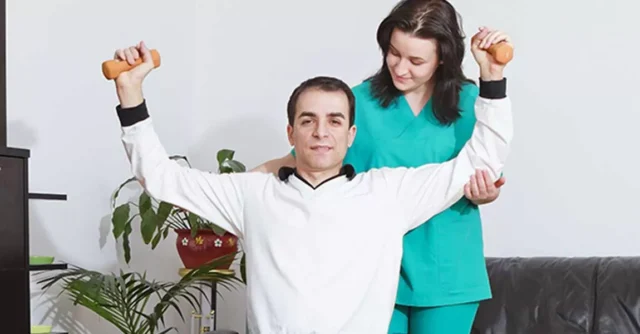
Importantly, there are significant devices and therapies that can manage the symptoms of ALS that help people maintain as much independence as possible and prolong survival. It is important to remember that ALS is a quite variable disease; no two people will have the same journey or experiences. There are medically documented cases of people in whom ALS ‘burns out,’ stops progressing or progresses at a very slow rate.
Source: http://www.alsa.org/