
Snoring and obstructive sleep apnea occur when one or more parts of the upper airway – including the nose, mouth, and throat – become blocked during sleep, causing oxygen deprivation and leading to various health conditions.
There are many treatment options available, including medication, lifestyle changes, airway expansion devices, and surgery. The primary goal of surgical treatment is to correct abnormal structures causing the obstruction, improving airway function and enhancing the effectiveness of devices such as CPAP machines. A thorough upper airway evaluation is recommended for all patients to ensure the most effective treatment.
Nasal Surgery
- Radiofrequency turbinate reduction — reduces nasal tissue swelling for easier breathing
- Septoplasty — corrects a deviated nasal septum
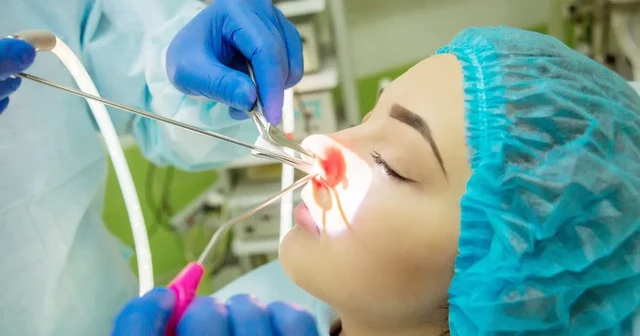
- Endoscopic nasal surgery — removes nasal polyps or other growths
Oral Surgery
- Radiofrequency treatment of the soft palate or tongue base — reduces soft palate collapse and shrinks the tongue base to widen the airway
- Palatal implant — inserted into the soft palate to provide structural support
- Tonsillectomy / Adenotonsillectomy — particularly effective in children with snoring and sleep apnea
- UPPP (Uvulopalatopharyngoplasty) — tonsil removal combined with soft palate reshaping
Throat Surgery
Removal of obstructions in the throat such as tumors or cysts that contribute to airway blockage.
Additionally, facial bone restructuring and other surgical procedures may be performed to widen the airway and improve breathing.
For inquiries about airway evaluation or surgical treatment for snoring and sleep apnea, please consult the ENT Center at Bangkok Hospital Pattaya.