While the medical community and researchers are trying to find the best treatments for current diseases, new infectious diseases continue to emerge, giving them more work to do. The latest infectious disease is Nipah Virus infection, which is being discussed worldwide right now because it’s a new type of infection with no direct cure available.
What is Nipah Virus Infection?
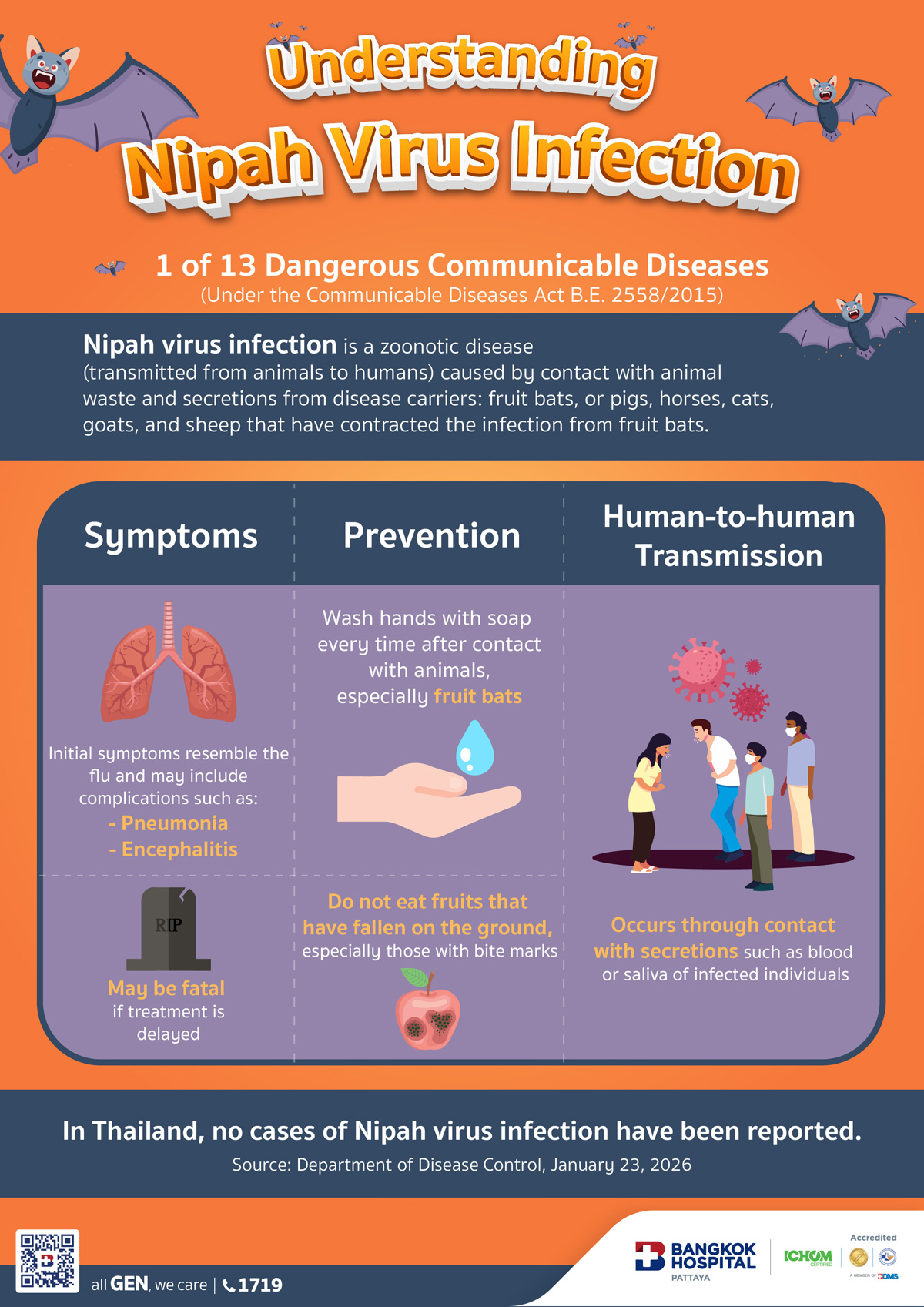
Nipah virus infection is a zoonotic disease (transmitted from animals to humans) caused by contact with animal waste and secretions from disease carriers, including fruit bats, or pigs, horses, cats, goats, and sheep that have received the infection from fruit bats.
It can be transmitted from person to person through contact with secretions of infected individuals, such as blood or saliva.
Nipah virus infection first spread during 1998-1999 in Malaysia, Singapore, Bangladesh, and India.
Origin
Nipah henipavirus (Nipah virus, NiV) was first discovered in 1998 in Malaysia, but was reported to spread to humans in Bangladesh in 2004, and the first human-to-human transmission was found in India on May 22, 2018.
The World Health Organization (WHO) declared that Nipah virus is ranked as one of the top ten modern-day pathogens at risk of severe outbreaks. Historical reports show more than 100 deaths out of approximately 300 infected people, with outbreaks found in pigs from Malaysia, requiring the culling of at least one million pigs.
The symptom period for Nipah virus resembles common flu. In the first one to two days, there is high fever, dizziness, muscle aches, rapid breathing or difficulty breathing, but it becomes more severe when loud coughing occurs. If not treated in time, it can lead to encephalitis and death.
No cases have been identified in Thailand yet, but it’s somewhat unfortunate that currently there is no vaccine for treatment in either humans or animals, and those infected with Nipah virus have a mortality rate as high as 70%.
Risk Factors
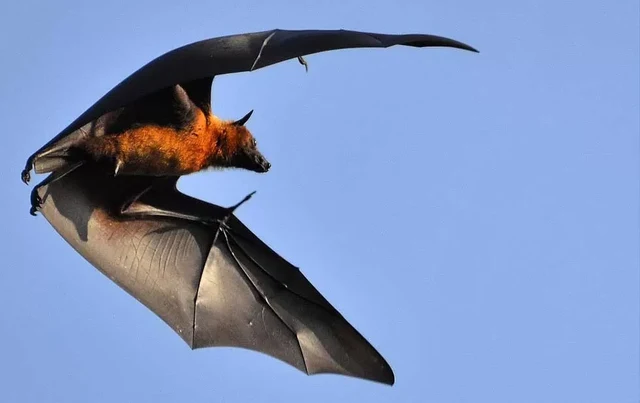
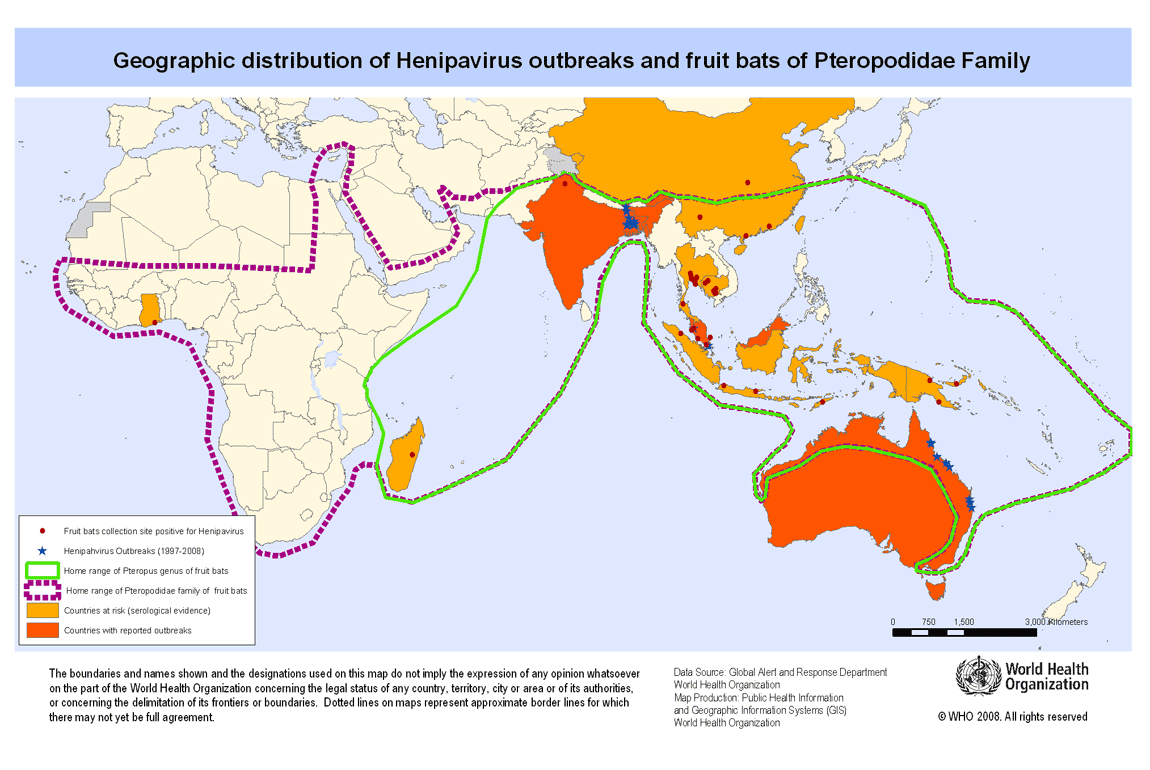
Farmers who raise animals including pigs, horses, cats, goats, and sheep, as well as those living in areas close to fruit bat habitats. These are found in dense forests or forests near communities worldwide, except in the Arctic regions. In Thailand, the well-known species is the large flying fox (Pteropus vampyrus), considered an agricultural pest. Additionally, eating fruits such as bananas or guavas that bats have eaten, and climbing trees where bats roost, can also be risk factors for Nipah virus infection.
Map showing Nipah virus outbreaks and fruit bat habitats (Megabats or bats in the Pteropodidae family) Source: WHO
Symptoms
- Similar to common flu symptoms such as fever, headache, fatigue, muscle aches
- Rapid breathing or difficulty breathing
- If symptoms worsen, loud coughing may begin
- Dangerous complications may occur, such as pneumonia and encephalitis. When symptoms become severe, they resemble encephalitis (Thais call this Nipah encephalitis)
- Drowsiness, confusion, or seizures
“The mortality rate for Nipah encephalitis in humans is approximately 40%”
Treatment
Currently, there is no medication that can directly combat Nipah virus, nor is there an effective vaccine to prevent it. Therefore, doctors treat symptoms. The antiviral drug Ribavirin may be used in Nipah virus-infected patients to reduce disease severity.
Prevention of Nipah Virus Infection
- Wash hands thoroughly with soap every time after contact with animals, animal meat, or carcasses (especially pigs, horses, cats, goats, sheep, and fruit bats)
- Do not eat undercooked or raw meat
- Clean household items and personal equipment with disinfectant when in areas at risk of infection, such as dense forests or animal breeding areas
- If you find animal carcasses that died from unknown causes, do not consume them. Destroy carcasses by burning or burying
- If you find infected animals or carcasses, do not move or drag the animal more than 2 kilometers from where found to prevent disease spread
- Do not eat fruits that have fallen on the ground in forests or other areas, especially those with animal bite marks
Source: Reuters, VoiceTV, World Health Organization (WHO), BBC