![Focused Shockwave Therapy for Erectile Dysfunction Package [Prices start at THB 8,500]](https://static.bangkokhospital.com/uploads/2025/11/12000-12000-shockwave_0-48-07-300x300.jpg)

Many people believe that low testosterone affects only older men. In reality, this condition can occur at various stages of life and may quietly impact physical health, emotional well-being, and personal relationships.
This article provides an overview of testosterone deficiency and explains testosterone replacement therapy (TRT)—a medically supervised treatment that — when appropriately prescribed — can help restore confidence and improve quality of life.
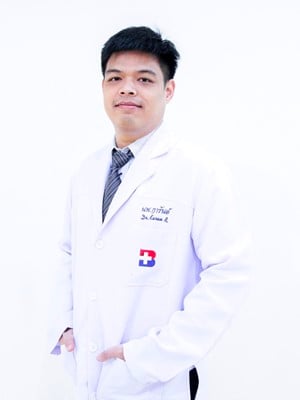
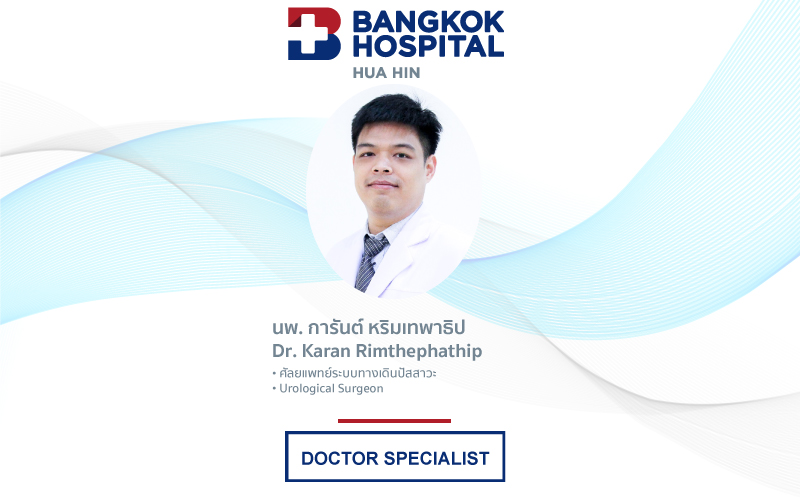
Dr Karan Rimthephathip (Medical Licence No. 40009), urologist at Bangkok Hospital Hua Hin, explains that low testosterone, or testosterone deficiency, occurs when the body produces less testosterone than normal. Testosterone is a key hormone that plays a vital role in many aspects of men’s health, including muscle strength, bone density, energy levels, mood, sexual function, and overall quality of life.
What Causes Low Testosterone?
Testosterone levels naturally decline with age, particularly from around 30–40 years onwards. However, ageing is not the only factor. Several health and lifestyle factors can accelerate this decline, including:
- Obesity or excess abdominal fat
- Metabolic conditions, such as diabetes or high blood cholesterol
- Chronic illnesses, including high blood pressure
- Ongoing stress and insufficient sleep
- Certain medications
- Alcohol consumption and smoking
An accurate diagnosis requires both clinical symptoms and blood test results, with low testosterone confirmed on at least two separate morning tests, when hormone levels are typically at their highest.
Warning Signs Not to Ignore
Symptoms of low testosterone often develop gradually and may be mistaken for normal ageing. Common signs include:
- Persistent fatigue or low energy
- Reduced sexual desire
- Decreased sexual performance
- Loss of muscle mass with increased body fat
- Mood changes, irritability, or low mood
- Poor sleep quality or difficulty sleeping
Although these symptoms may appear mild or non-specific, they can be associated with low testosterone and should be assessed by a doctor for appropriate management.

What Is TRT and How Can It Help?
Testosterone replacement therapy (TRT) is a treatment designed to restore testosterone levels to a healthy range under medical supervision. Available treatment options include:
- Testosterone injections
- Transdermal gels applied to the skin
- Oral testosterone medication
When prescribed appropriately, TRT can help improve energy levels, increase muscle mass, reduce body fat, stabilise mood, restore sexual function, and enhance overall quality of life. However, outcomes vary from person to person, and TRT may not resolve every symptom.
Common Misconceptions About TRT
X Myth: “TRT is dangerous”
✔Fact: When prescribed and monitored by a doctor, TRT can be used safely in carefully selected patients.
X Myth: “Once you start TRT, you must continue for life”
✔Fact: Treatment is individualised and may be adjusted or discontinued based on clinical response and ongoing assessment.
X Myth: “TRT is only for older men”
✔Fact: Younger men with symptoms and confirmed low testosterone may also benefit from treatment following proper evaluation.

What Tests Are Needed Before Starting TRT?
Before initiating treatment, doctors will carry out a comprehensive assessment, including:
- Blood tests to measure testosterone levels
- Full blood count
- Prostate screening (including PSA)
- Assessment of symptoms and overall health
- Additional investigations based on individual risk factors
Regular follow-up during treatment is essential to ensure both safety and effectiveness.
Potential Risks to Consider
As with any medical treatment, TRT may carry certain risks, including:
- Increased red blood cell levels (polycythaemia)
- Changes in PSA levels, requiring ongoing prostate monitoring
- Fluid retention or swelling
- Acne, oily skin, or worsening sleep apnoea in susceptible individuals
- Suppression of sperm production, which may affect fertility temporarily and, in some cases, for a prolonged period.
For this reason, TRT should always be prescribed and monitored by a qualified doctor with regular follow-up.
TRT Is Not a Cure–All—But It Can Be the Right Option
“TRT is not simply about increasing hormone levels,” says Dr Karan.
“It is part of a holistic approach to men’s health. Lifestyle changes—such as regular exercise, adequate sleep, and weight management—play an important role in achieving the best outcomes.”If you feel that your body is “not quite the same as it used to be”, do not ignore these changes. Early assessment and appropriate treatment may help you regain confidence, improve your wellbeing, and enhance your quality of life.
— Dr Karan Rimthephathip
Urologist | Bangkok Hospital Hua Hin
***********************************************
For more information and booking an appointment, please contact :
Tel: 032-616-880 (7.00 – 19.00 hrs.) Internal Medicine Department – Urology, ground floor
Tel. 032-616-800 Call Center, Bangkok Hospital Hua Hin
News & Promotions >> Line ID : @bangkokhuahin


![Focused Shockwave Therapy for Erectile Dysfunction Package [Prices start at THB 8,500]](https://static.bangkokhospital.com/uploads/2026/06/12000-12000-shockwave_0-48-07-card_optimized.webp)