
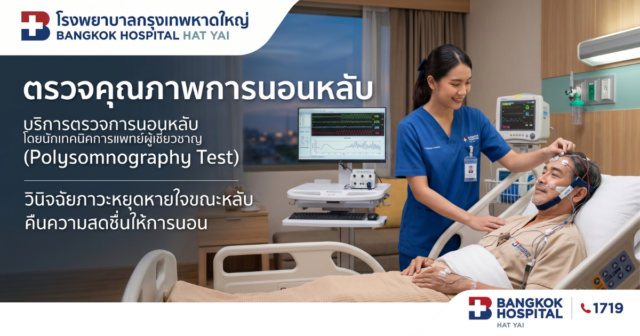

Sleep Quality Test (Polysomnography)
This is a comprehensive evaluation of the functioning of various body systems while you are asleep, used to diagnose abnormalities or diseases related to sleep, especially obstructive sleep apnea (Obstructive Sleep Apnea – OSA).
This test uses various devices and sensors attached to the person undergoing the examination to record important data throughout the night. It is usually performed in a sleep laboratory (Sleep Lab) at a hospital or a specialized medical center.
What does this test measure?
During sleep, the machine records multiple physiological data simultaneously, including:
-
Brain waves (EEG): to assess sleep cycles (Sleep Stages), helping the doctor know how much time you spend in light sleep, deep sleep, and dream sleep (REM sleep).
-
Eye movements (EOG): used to help identify the dream sleep stage (REM sleep).
-
Muscle activity (EMG): sensors are often placed on the chin and legs to detect abnormal muscle movements or jerks.
-
Electrocardiogram (ECG/EKG): monitors heart rate and rhythm throughout the night.
-
Respiratory system: measures airflow in and out through the nose and mouth, as well as chest and abdominal movements to assess breathing effort.
-
Blood oxygen level (SpO2): measures oxygen saturation, typically clipped to a fingertip, to see whether the body has low oxygen due to breathing pauses.
Who should undergo a Sleep Test?
Doctors often recommend Polysomnography if a patient has the following symptoms or risks:
-
Regular loud snoring
-
A bed partner observes choking, gasping, or breathing pauses during sleep
-
Feeling fatigued, not refreshed, or excessively sleepy during the day despite sleeping all night
-
Waking up with headache, dry mouth, or dry throat in the morning
-
Abnormal behaviors during sleep, such as sleepwalking or severe limb jerking
-
Suspected narcolepsy or chronic insomnia with an unknown cause
The information obtained from Polysomnography helps doctors assess disease severity and create a targeted treatment plan, such as using continuous positive airway pressure (CPAP) for those with obstructive sleep apnea.