
AI Retinal Image Innovation Helps Assess Future Health Risks
In a world where technology is rapidly advancing, preventive care is becoming increasingly important. One notable innovation is “AI Retinal Image”, which uses artificial intelligence to accurately analyze potential health risks in the future.
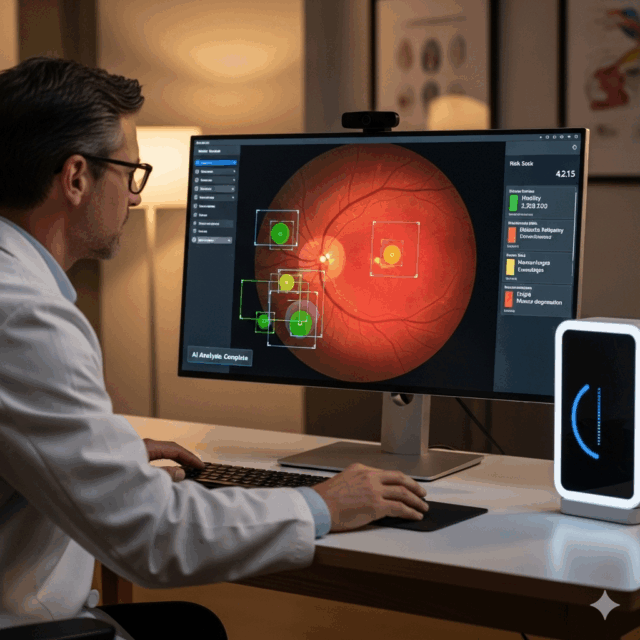
The principle of this technology involves using high-resolution images of the retina, which is the only part of the body where doctors can clearly and easily see blood vessels, especially small vessels. Any abnormalities in these vessels often provide early warning signs of various diseases.
From the data processed by AI from the characteristics of the blood vessels in the retina, doctors can assess the risk of future diseases such as atherosclerosis or the risk of diabetes. Additionally, AI technology can also analyze brain health from the characteristics of the optic nerves, which are part of the central nervous system, allowing for the prediction of brain-related diseases such as dementia.
This marks the beginning of a new era in health check-ups that can be done quickly and painlessly, enabling us to plan and take care of ourselves promptly before diseases threaten our lives.
Guidelines for Further Adjustments
-
Change the storytelling perspective: Instead of providing straightforward information, try a narrative approach or use questions to attract attention, such as “How great would it be if we could know the risks of various diseases in advance just by examining our eyes?”
-
Use analogies: Compare the retinal image to a road map that indicates traffic conditions (health of blood vessels) or liken the AI’s function to a detective searching for abnormal clues.
-
Add beneficial sections for readers: Explain how this technology makes life better, such as reducing medical expenses in the long run or providing more time to prepare for various diseases.
-
Adjust the use of technical terms: Minimize the use of complex numbers or technical jargon, such as changing “artery 135.73 ± 15.64 μm” to “sensitive small blood vessels” to make it easier for general readers to understand.