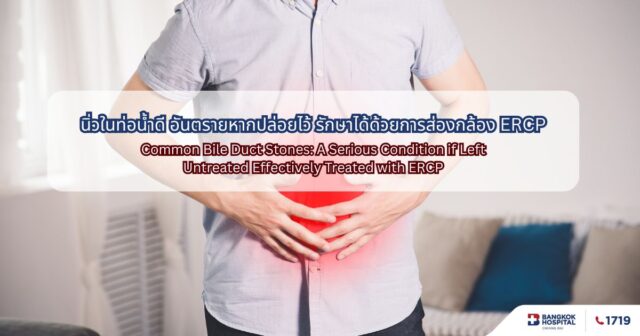
Common bile duct stones occur when stones form within the bile duct system. When blockage develops, bile cannot flow normally into the intestine, which may lead to serious complications such as:
- Bloodstream infection (sepsis)
- Acute pancreatitis
- Liver inflammation
- Life-threatening conditions if untreated
Early diagnosis and appropriate treatment by a specialist are therefore essential.
Symptoms That May Indicate Bile Duct Stones
Patients may experience the following symptoms:
- Severe pain in the upper abdomen or right upper quadrant
- Yellowing of the skin and eyes (jaundice)
- Dark-colored urine
- Pale or clay-colored stools
- High fever and chills
If you experience these symptoms, seek medical attention promptly to prevent serious complications.
What is ERCP?
ERCP (Endoscopic Retrograde Cholangiopancreatography) is an advanced medical procedure used for both diagnosis and treatment of bile duct and pancreatic diseases.
During the procedure, a flexible endoscope is passed through the mouth into the stomach and duodenum to access the bile duct. Specialized instruments are then used to remove the stones without open surgery.
ERCP is a highly effective technique and widely accepted worldwide.
Benefits of ERCP Treatment
- No open abdominal surgery required
- Less pain and minimal tissue trauma
- Faster recovery time
- Diagnosis and treatment performed in a single procedure
- Reduced risk of long-term complications
Preparation Before ERCP
For safety and optimal results, patients should:
- Avoid food and drinks for at least 6–8 hours before the procedure
- Inform the doctor about medical history, underlying diseases, and current medications
- Undergo pre-procedure medical evaluation as advised
The procedure typically takes 30–60 minutes, and patients may need to stay in the hospital for 1–2 nights for observation.
Post-Procedure Care
After ERCP, patients should:
- Follow the doctor’s instructions carefully
- Avoid fatty or difficult-to-digest foods initially
- Seek medical attention immediately if experiencing severe abdominal pain, fever, or vomiting
Additional Information
If gallbladder stones are also detected, doctors may recommend gallbladder removal surgery after ERCP to help prevent recurrence in the future.