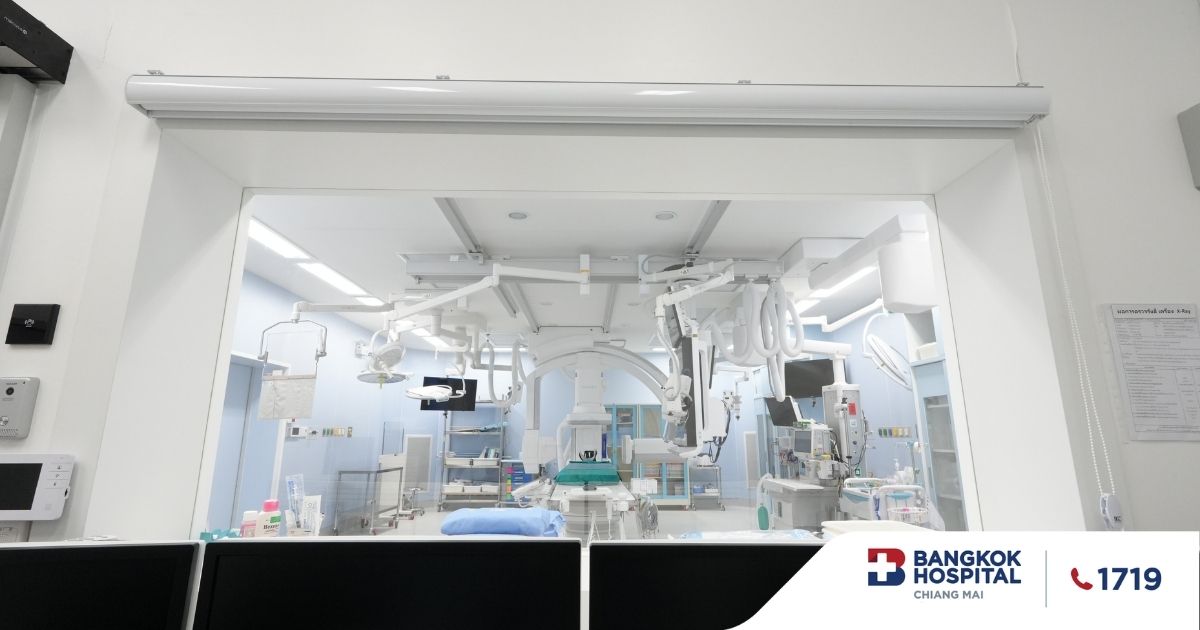


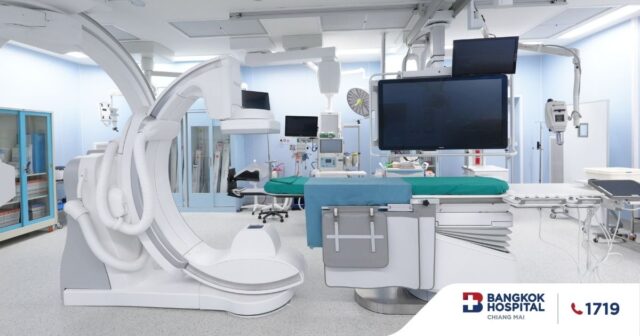
When it comes to diagnosing and treating cardiovascular and cerebrovascular diseases, precision and safety are paramount. Every procedure involves vital organs, and in many cases, time can determine life and long-term outcomes—especially for stroke patients, where every minute truly matters. For people in Northern Thailand, access to advanced medical technology no longer requires traveling to the capital. The introduction of the Biplane Angiography system has meaningfully elevated the standard of vascular care and patient safety within the region itself.
Many people are familiar with the Cath Lab, or cardiac catheterization laboratory, where specialized X-ray imaging is used to visualize blood vessels within the body. Standard systems typically operate on a Single Plane platform, capturing images from one angle at a time. If physicians require another perspective, the equipment must be repositioned or imaging repeated. This process may require additional contrast injections and increase radiation exposure. In contrast, a Biplane system captures two planes simultaneously in a single acquisition, providing a complete and highly precise view of the vascular structure instantly—without the need for repeated imaging.
One of the most significant benefits for patients is the reduction in contrast media usage. Contrast agents are essential for clearly visualizing blood vessels; however, in certain individuals—particularly elderly patients or those with kidney conditions, which are commonly seen in the northern population—higher volumes may increase the risk of complications. Because Biplane technology allows dual-angle visualization with a single injection, it significantly reduces the total amount of contrast media required. This means less strain on the kidneys and a lower likelihood of contrast-related side effects.
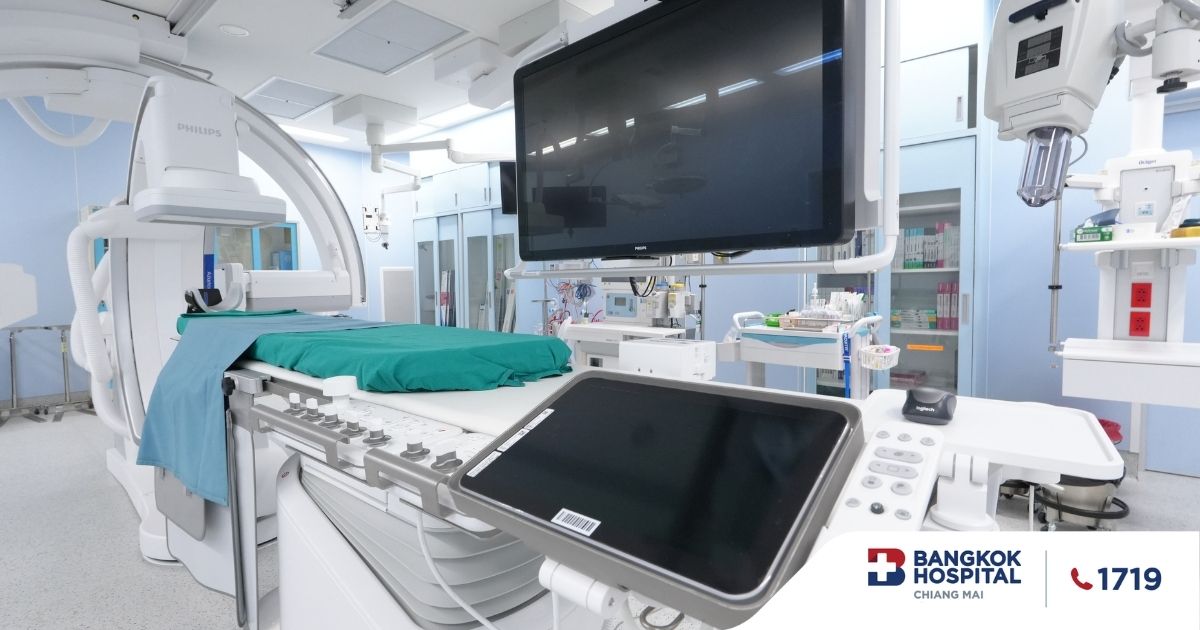
In addition, Biplane helps reduce radiation exposure. With conventional systems, obtaining multiple views requires repeated imaging, each adding to cumulative radiation dose. By providing two simultaneous perspectives, Biplane decreases the need for repeat exposures, resulting in lower overall radiation accumulation. At a time when global medical standards increasingly emphasize radiation safety, such advancement clearly reflects a genuine commitment to patient well-being.
Time efficiency is another critical factor—particularly for stroke patients, whose incidence continues to rise in Northern Thailand. The ability to visualize two angles at once allows physicians to identify clots or areas of blockage more rapidly, plan treatment with greater precision, and shorten procedural time. Reduced procedure duration lowers anesthesia-related risks and potential complications, improving recovery outcomes and helping patients regain quality of life more quickly.
For complex vascular conditions—such as cerebral aneurysms, vascular malformations, or highly specialized interventional procedures—the capability to assess anatomy from two directions simultaneously enhances precision in device placement and treatment strategy. Greater accuracy directly translates into reduced procedural risk and increased confidence for the medical team.
Key Advantages of the Biplane System
- Simultaneous dual-plane imaging (frontal and lateral views)
- High-resolution, exceptionally clear images, enabling visualization of even very small vascular catheters
- Near three-dimensional imaging capability, providing clearer identification of vascular pathology
- Reduced risk and side effects, as a single contrast injection provides dual views—resulting in lower radiation and contrast exposure
- Faster and more efficient diagnosis, particularly for time-sensitive conditions such as stroke and coronary artery disease
- Increased confidence in treatment outcomes, strengthening regional clinical capability
Investing in a Biplane system is not merely an equipment upgrade; it is a strategic decision that reflects a commitment to raising the standard of care in Northern Thailand to match that of leading medical centers nationwide. Implementing this technology requires advanced facility infrastructure, stringent safety systems, highly specialized physicians, and internationally trained medical personnel. Every element is meticulously designed to ensure that diagnosis and treatment are delivered with maximum precision, safety, and efficiency.
For patients and families in Chiang Mai and neighboring provinces, having access to advanced medical technology close to home reduces travel burden, lowers stress, and ensures more timely treatment. Confidence comes from knowing that care is delivered under standards that prioritize safety first—through reduced radiation exposure, minimized contrast usage, and enhanced procedural accuracy.
Because the health of people in Northern Thailand is just as valuable as anywhere else in the country, advanced technology should be accessible close to home—ready to provide superior, safer, and more attentive care during life’s most critical moments