


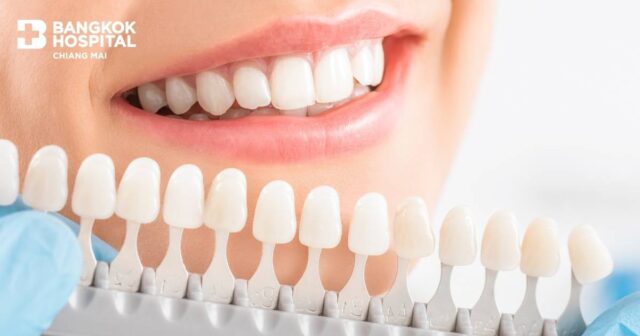

Before discussing teeth whitening, let’s first understand what causes our teeth not to be white. Typically, natural permanent teeth, when newly erupted, have a white-yellowish color. The degree of yellow depends on our genetics or ethnicity. However, in some cases, newly erupted teeth may appear gray or brown. This color results from the accumulation of pigments during the formation of dentin when we are children. These pigments often come from certain medications or minerals we consume. Beyond the internal colors mentioned, teeth can also absorb colors from the foods and beverages we consume. This is because the outer layer of our teeth (Enamel) actually has small pores. When we eat, the colors from the food penetrate and settle in these pores. Over time, the accumulation of pigments from food increases. It can be observed that older people’s teeth are always darker than younger people’s teeth. So, what types of foods cause teeth to darken? An easy way to notice is foods and beverages with strong colors, such as various carbonated drinks, especially colas with their dark color, tea, coffee, and red wine. Besides food and drinks, cigarettes and cigars can also darken teeth. It can be seen that there are several causes for teeth not being white, so the solutions vary.
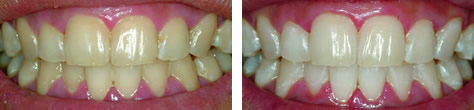
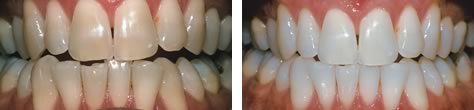
Image credit: http://www.zoomwhitening.com
Tooth bleaching, commonly known as tooth whitening, is a process to make teeth return to the whiteness of when they first erupted or sometimes even whiter than natural teeth. The tooth bleaching process starts with cleaning the teeth by polishing to remove coarse food stains on the outermost surface of the teeth and the plaque covering the tooth surface, preparing the enamel for the bleaching process. Tooth bleaching agents are classified in the group of Peroxide oxidizing agents, notably Carbamide peroxide or Hydrogen peroxide. These agents can penetrate tooth surfaces and break down the pigments accumulated in the enamel. We can divide tooth bleaching into two types based on the method:

Image credit: http://www.zoomwhitening.com
- In-office tooth bleaching (Light accelerated tooth bleaching): This method must be performed by a dentist within the clinic, using blue light from a light machine to activate the tooth bleaching agent, accelerating the process. It usually takes about 30-45 minutes. This method is often mistakenly called laser tooth bleaching, but in truth, the light used is a high-intensity blue light, not a laser. Lasers were used in the past but yielded unsatisfactory results and were not popular. In-office bleaching is suitable for those who have less time or are inconvenient to do it at home. The procedure involves first checking that the teeth are eligible for bleaching and cleaning them. The dentist will then isolate the bleaching area from the gums and other oral tissues, apply the bleaching agent to the teeth, and use light to activate the agent for 30-45 minutes. Finally, the agent is removed, completing the procedure.
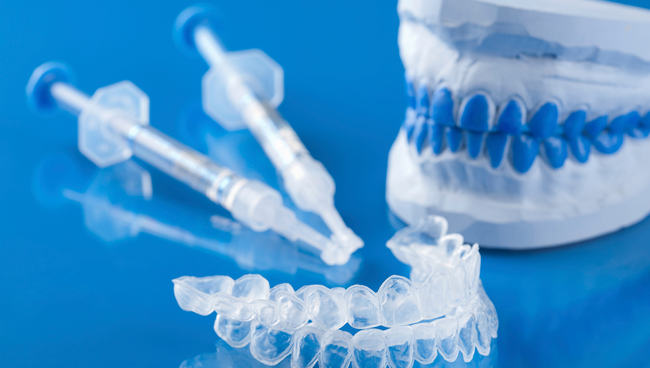
Image credit: teethwhiteningprices.net
- Home bleaching: This utilizes a similar bleaching agent but at a lower concentration than the first method. The person wishing to bleach must first visit a dentist to assess eligibility. An impression is then taken to make a bleaching tray. After receiving the tray and bleaching agent, the person can proceed to bleach their teeth by applying the bleaching agent into the tray and wearing it. The duration depends on the type and concentration of the bleaching agent, ranging from 1 to 8 hours. Generally, tooth bleaching of any type causes varying degrees of tooth sensitivity, and the advantage of home bleaching is the ability to pause for 1-2 days or until sensitivity subsides, then resume bleaching. This can be repeated until achieving the desired whiteness, at which point bleaching can be stopped.
Preparation before tooth bleaching: If there are cavities or tooth erosion in the targeted bleaching areas, the dentist must fill the teeth to protect the inner dentin before proceeding with bleaching.
No tooth bleaching method can whiten existing filling materials or crowns. Therefore, if there are tooth-colored fillings or crowns in the front teeth, it may be necessary to replace them or place new crowns post-bleaching to match the newly whitened adjacent teeth. Additionally, some natural teeth types respond less to tooth bleaching, such as those darkened by medications taken during childhood (Tetracycline stain). If teeth are significantly darkened and bleaching is ineffective, a dentist may recommend alternative restoration methods like ceramic veneers.
For more information, contact the Dental Clinic, 4th Floor, Bangkok Hospital Chiang Mai
Operating hours: Monday – Sunday 8:00 AM – 8:00 PM
Phone: 052-089-783 or 1719
Email: [email protected]