


Being a professional golfer while preventing injuries
Although golf might look like an easy game to play, just to hit a stationary object with a club into a relatively wide open space, in fact, golf requires tremendous practice and efforts as well as perseverance and excellent skills.

Translated by AI
Epilepsy in children: Know early, treat quickly, recover fast.
If your child has symptoms such as muscle stiffness, twitching, jerking, or experiences daydreaming, blurred vision, or becomes unresponsive without awareness, suspect that they may have epilepsy. You should consult a doctor immediately because fast diagnosis and treatment increase the chance of returning to normal health.
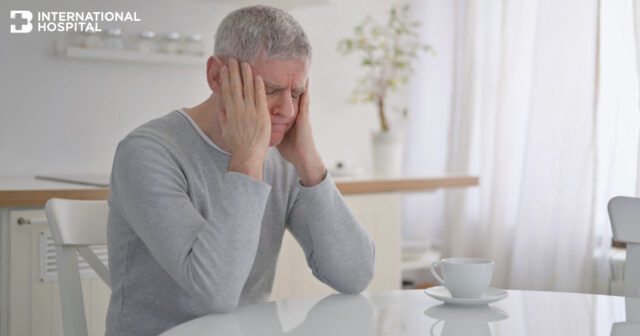
Detecting epilepsy in its early stages
Memory loss, lack of concentration, sleeping and waking late are not to be taken lightly as they could very well be symptoms of a hidden epilepsy condition.

Rectal bleeding: The warning sign of hemorrhoids and colorectal cancer
Rectal bleeding is not only the common sign of hemorrhoids, but colorectal cancer. Due to the similarity of clinical manifestations, colorectal cancer is often mistaken for hemorrhoids, leading to delayed diagnosis and ineffective treatments.

How to treat colorectal polyps/ cancer without permanent colostomy.
Colorectal polyps are small clumps of cells that form on the lining of the colon and rectum. Colorectal cancer is the development of cancer cells from the colon or rectum. Sometimes polyps or cancerous tumors develop relatively close to the anal canal, a short tube at the end of the rectum through which stool leaves body, resulting in complicated treatment which essentially requires highly experienced multidisciplinary team to achieve the best possible treatment outcomes.

Hemorrhoids and colorectal polyps. Early detection increases chances of being successfully cured.
Hemorrhoids are the most common cause of rectal bleeding, but colorectal cancer can also cause rectal bleeding. Due to the similarity of manifestations, patients are often confused, leading to delayed diagnosis and ineffective treatments.

How PM2.5 air pollution potentially induces cardiovascular disease
In Thailand, particularly in Bangkok and metropolitan region, a massive cloud of ultra-fine dust particles known as PM2.5 has recently returned. According to the World Health Organization (WHO), the concentration of PM2.5 pollutants should not exceed the safe threshold of 10-25 µg/m³.

Radio frequency skin tightening: getting your face lifted even quicker.
Due to the advancements in skin care and esthetic technology, radiofrequency skin tightening is an aesthetic technique that uses radio frequency, shortly called RF energy to heat skin in order to stimulate cutaneous collagen, elastin and hyaluronic acid production for reducing the appearance of fine lines wrinkles and loose skin.

Essential vaccination to boost up the health of your infants.
Vaccination is a highly effective method for preventing certain infectious diseases in babies and children. Not only to boost immunity to reach the optimal level that acts efficiently against infections, but vaccination also helps reducing epidemic spread and disease severity that largely affect child development.

Diet during pregnancy: Mother-to-be should know
Since a normal pregnancy usually lasts about 40 weeks, a healthy diet is an important part for both mothers and babies. Healthy eating during pregnancy is critical to the baby’s growth and development. A number of medical researches has strongly indicated that lack of adequate nutrition of good quality and quantity during pregnancy can potentially cause health-related problems for both mothers and babies.

Golf injuries can be treated and perhaps preventable.

PNEUMONIA – DO NOT IGNORE TILL IT’S TOO LATE
Pneumonia causes the oxygen exchange process of the lungs to deteriorate. This affects the body’s respiratory system, leading to shortness of breath and difficulty breathing.