

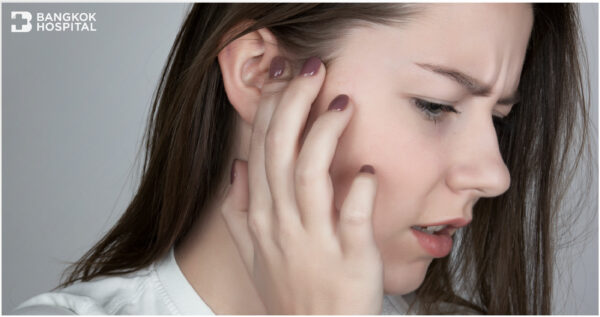
The ear is not just the hearing organ. It is a complex system that helps facilitating balance. Tinnitus is the perception of noise or ringing in the ears. It is a common problem that usually ignored by the majority of people since it is believed to be self-limiting condition. In fact, tinnitus is not a condition itself, but it is a symptom of certain underlying conditions such as age-related hearing loss, ear injury or a circulatory system disorder. Thus being aware of abnormal noise in the ears helps to seek early medical attention. If abnormalities are found during its initial stage, the chances for successful treatment increase with minimized complications.
Get to know “tinnitus”
Tinnitus involves the sensation of hearing unusual sound when no external sound is present. Symptoms may include these types of phantom noises in the ears:
- Humming
- Roaring
- Echoing
- Shrilling
- Ringing
- Buzzing
- Clicking
- Hissing
- Rhythmic thumping or throbbing
- Whooshing
- Wheezing
The phantom noise might vary in pitch and tone from a low roar to a high squeal. It might be heard in one or both ears. Tinnitus may occur all the time or it may come and go. It can be heard clearly especially in quiet environment. In some cases, the noise can be extremely loud and it can interfere daily life and impair patient’s ability to concentrate or hear external sound, leading to health-related problems such as fatigue, stress, sleep problems, trouble concentrating, memory problems, depression as well as anxiety and irritability.
Causes of tinnitus
A number of health conditions can cause or worsen tinnitus. Possible causes include:
- Earwax blockage. An excessive earwax accumulation becomes too hard to wash away naturally, causing irritation of the eardrum which can eventually lead to tinnitus.
- Ruptured eardrum e.g. otitis media (a group of inflammatory diseases of the middle ear)
- Inflamed eardrum (otitis externa) caused by common cold that blocks the inner ear and causes unusual sound in the ears.
- Neurological conditions such as brain tumors, ischemic strokes or hemorrhagic strokes.
- Blood vessel disorders such as high blood pressure (hypertension), atherosclerosis (the thickening and hardening of the walls of the arteries) and aneurysm, an abnormal bulge that occurs in the wall of the blood vessel.
- Age-related hearing loss. Tinnitus tends to develop in the elderly due to the degeneration of auditory nerve.
- Exposure to loud noise. Common sources of noise-related hearing problems include heavy equipment e.g. chain saws and firearms, portable music devices, guns, firework and a loud concert.
- Some side effects of certain medications
- A sudden change of external pressure e.g. during diving into deep area, serious changes to the auditory system occur due to the effects of underwater pressure. Sudden alteration of surrounding pressure affects both middle ear and inner ear, causing tinnitus.
- Other causes e.g. ear bone changes, abnormality of jaw, sinusitis, ear infections and Meniere’s disease (an inner ear disorder that may be caused by abnormal inner ear fluid pressure).
Diagnosis of tinnitus
Tests to diagnose tinnitus include:
- Medical history taking including characteristics of noise, duration that it usually lasts for and affected time e.g. night time or day time period.
- Audiometry, a measuring hearing ability for variations in sound intensity and pitch involving thresholds and frequencies.
- SISI Score (Recruitment Test) to detect and measure auditory perception in the inner ear.
- The tone decay test to detect and measure auditory fatigue.
- Bekesy audiometry, also called decay audiometry to identify the affected lesions that generate tinnitus.
- Auditory Brainstem Response ( ABR) test measures the hearing nerve’s response to sounds.

Treatment of tinnitus
If tinnitus is caused by certain health conditions, those problems should be corrected. Treatments to alleviate the interrupting noise include:
- Avoiding trigger factors such as loud noise and alcohol drinking.
- Using an electronic device to suppress the noise. Devices include white noise machines and hearing aids.
- Noise suppression such as programmed tonal music.
Certain medications might help reducing the severity of symptoms or complications. Medications include antidepressant drugs, sleeping pills, vasodilators (medicines that dilate blood vessels, allowing blood to flow more easily), supplements that enhance hearing and drugs that reduce ear sensitivity. If other underlying causes have been discovered, they must be primarily treated such as brain surgery to remove brain tumor.
Prevention of tinnitus
Even though tinnitus might be caused by some factors that cannot be prevented, some precautions can help reducing risks of tinnitus. These recommendations include:
- Avoid listening to loud noise in long period of time. Using hearing protection and turning down the volume are highly advised.
- Avoid using headphones during sleeping time or during in the noisy environment since listening to music at very high volume through headphones can cause hearing loss and tinnitus.
- Safely and gently clean the ears to avoid ear injuries
To treat tinnitus effectively, underlying causes must be addressed and treated. If tinnitus presents and largely impairs daily life and activities, medical attention must be sought immediately. If tinnitus can be treated within 2 weeks, the chances of being completely cured significantly increase.