
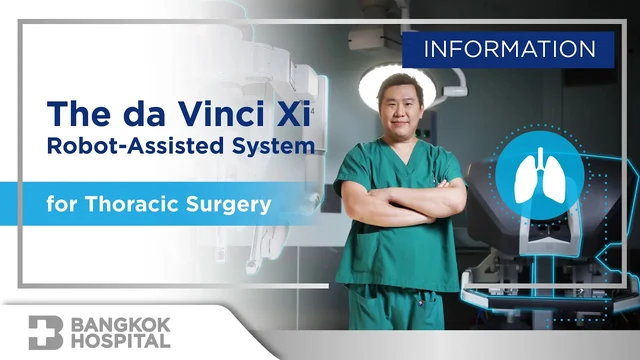
Thoracic surgery requires exceptional precision because many vital organs, nerves, and lymph nodes are located deep within the chest and can be difficult to access.
The da Vinci Xi Robot-Assisted System enhances minimally invasive thoracic surgery by providing greater precision and improved access to complex anatomical areas. It also helps surgeons preserve important nerves and surrounding tissues while supporting a faster recovery after surgery.
Video Summary
The da Vinci Xi Robot-Assisted System for Thoracic Surgery
The da Vinci Xi Robot-Assisted System is used in a variety of thoracic procedures, particularly for the treatment of:
- Lung cancer.
- Mediastinal tumors and cancers.
- Thymus tumors and thymus cancer.
- Selected cases of esophageal cancer.
The robotic system allows surgeons to perform highly precise procedures in deep and confined areas within the chest through a minimally invasive approach.
Three Main Components of the da Vinci Xi Robot-Assisted System
Surgeon Console: the camera and robotic instruments from the Surgeon Console while viewing a magnified high-definition 3D image of the surgical field.
Patient Cart: supports four robotic arms. One arm holds the 3D camera, while the remaining three operate specialized surgical instruments for cutting, dissecting, cauterizing, and suturing.
Vision Cart: processes and displays real-time high-definition images, providing visual guidance for both the surgeon and the operating room team throughout the procedure.
Why Precision Matters in Lung Cancer Surgery
Lung cancer surgery involves more than removing the tumor. An important part of the procedure is the removal and evaluation of lymph nodes within the chest, which plays a significant role in surgical treatment.
Because these lymph nodes are located deep within the thoracic cavity, robotic-assisted surgery enables surgeons to access and dissect these areas with greater precision.
Preserving Important Nerves and Tissues
Another important goal of thoracic surgery is to preserve healthy organs, nerves, and surrounding tissues whenever possible.
The enhanced visualization and precise movement of the da Vinci Xi Robot-Assisted System help surgeons identify, separate, and preserve nerves and their branches more effectively during surgery.
Benefits of the da Vinci Xi Robot-Assisted System for Thoracic Surgery
The da Vinci Xi Robot-Assisted System offers several advantages for thoracic surgery:
- Improved access to deep structures and lymph nodes within the chest.
- Enhanced precision in complex thoracic procedures.
- Better preservation of important nerves and surrounding tissues.
- High-definition 3D visualization for greater surgical accuracy.
- Smaller incisions, less postoperative pain, and faster recovery.
- Reduced blood loss and a lower risk of surgical complications.
Enhanced Precision for Faster Recovery. At Bangkok Hospital, experienced thoracic surgeons combine advanced surgical expertise with the da Vinci Xi Robot-Assisted System to provide precise, minimally invasive treatment for appropriate patients. The goal is to reduce surgical trauma, preserve important anatomical structures, and help patients recover sooner and return to everyday life with confidence.