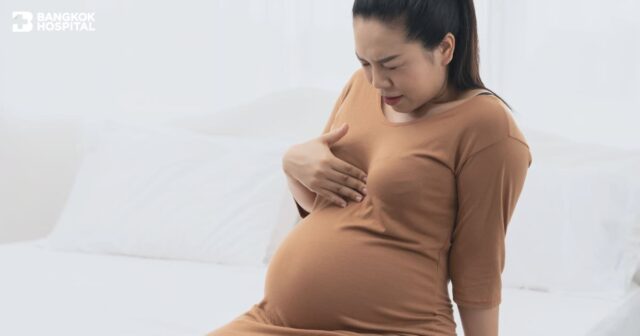



Having a healthy pregnancy plays a vital role in promoting a healthy birth. To achieve successful pregnancy, antenatal care (ANC) is the key entry point for pregnant women to receive a broad range of health promotions and prevention services. An antenatal care aims to assess the state of health of the mother and the fetus while preventing unwanted complications during pregnancy. The program provides women and their families with appropriate advices for a healthy pregnancy, safe childbirth and postnatal recovery. In addition, the antenatal care program also helps to enhance caring of the newborn, promoting appropriate breastfeeding and assisting future pregnancies in order to improve pregnancy outcomes.
The importance of an antenatal care
- Assessing the state of health of the mother and the fetus, allowing for safe and successful pregnancy including a healthy birth.
- Ensuring a healthy baby with appropriate growth and development
- Reducing the mortality rates of the mother and baby.
- Minimizing the risks of pregnancy-related complications due to early diagnosis and timely treatment.
Common problems before pregnancy
Preexisting conditions that are frequently detected before pregnancy include:
- Thalassemia (an inherited blood disorder characterized by decreased hemoglobin production)
- Diabetes mellitus
- Gynecological diseases e.g. myoma uteri (uterine fibroid)
- Hypertension
Common problems during pregnancy
The following conditions are common maternal health problems that women may experience during pregnancy:
- Twin pregnancy
- Gestational diabetes mellitus (GDM)
- Eclampsia and preeclampsia
- Premature birth
Maternal screening and testing
- Screening for sexual transmitted diseases
- Thalassemia test
- Screening for diabetes
- Detection of Streptococcus group B which is a bacterial found in vagina and rectum.
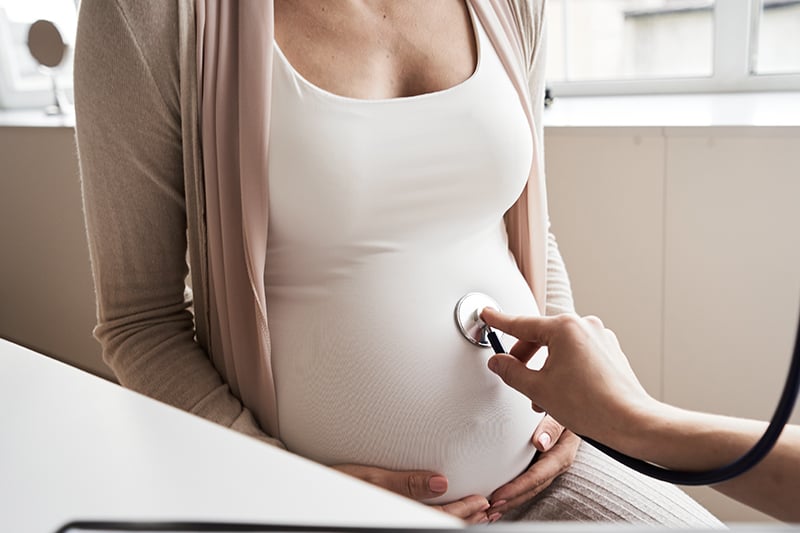
Prenatal screening and testing
- Ultrasound to visualize the fetal growth and development
- Screening test for Down’s syndrome
- Amniocentesis –a prenatal procedure to withdraw a small amount of amniotic fluid from the sac surroundings to detect chromosomal abnormalities and fetal infections
Screening test for Down’s syndrome
Down’s syndrome is the result of an extra number 21 chromosome. The extra genetic material causes changes that characterize the condition in both physical defects and intellectual disabilities.
- Screening tests for Down’s syndrome cannot definitely determine whether the baby actually has Down’s syndrome. In fact, the test only reveals the risks of the baby having Down’s syndrome.
- To perform testing, Nuchal Translucency scan (NT scan) – an ultrasound is used in the first trimester to determine the baby’s risk of having Down’s syndrome and some other chromosomal abnormalities. NT scan is usually conducted along with hormone blood tests.
- In case that test result indicates high-risk of having a baby with Down’s syndrome, amniocentesis as confirmative test will be subsequently considered.
- However, low-risk does not entirely assure that the baby will not have Down’s syndrome.
- Other genetic tests might be needed in some cases. For instance, the NIPT test is a non-invasive prenatal genetic test which safely screens for chromosomal abnormalities by using the blood of pregnant women.
Common problems during childbirth
- Labor that does not progress e.g. contraction weakens and the cervix does not dilate enough in a timely manner.
- Inappropriate baby’s position e.g. breech position. The ideal position is called cephalic presentation when the baby is positioned head-down, facing the mother’s back with the chin tucked to the chest.
- Perinatal asphyxia. This condition occurs when the fetus does not get enough oxygen supply in the uterus or the infant does not get adequate oxygen during labor or delivery, just after birth.
- Placenta previa. Low-lying placenta occurs when the placenta covers part or all of the cervix during the last months of pregnancy. As a result, this condition can lead to severe bleeding before or during labor.
- Retained placenta. Retained placenta is a condition in which all or part of the placenta or membranes remain in the uterus after delivery.
- Excessive bleeding. If delivery causes tears to the uterus or if the uterus does not contract to deliver the placenta, it can result in heavy bleeding.

Healthy tips for pregnant women during pregnancy
- Maintain healthy habits, e.g. eating nutritious food, regular exercise with work-life balance.
- Relieve stress and anxiety concerning pregnancy, childbirth and child care.
- Keep monitoring any abnormal signs. Seek medical assistance when abnormality exhibits without delay.
Recommendations for pregnant women
- Food consumption
-
- Increase calorie intake by 20%.
- Consume high-protein diet, e.g. meats, eggs, nuts and dairy products combined with essential minerals and vitamins.
- Consume more vegetables and fruits.
- Refrain from spicy food, alcohol and illicit drugs.
- Stop smoking.
- Hygiene
-
- Maintain good personal hygiene.
- Wear loose and confortable attires.
- Avoid wearing high heels.
- Take good care of dental health (e.g. scaling), abdominal skin, breasts and digestive system.
- Have sex with appropriate positions, if allowed without restrictions.
- Get plenty of sleep, 8-14 hours/day.
- Exercise and working
-
- Continue daily activities as recommended
- Do not work too much while keeping stress under control
- Avoid strenuous workouts
- Start low-impact exercise at 4 months of pregnancy
Natural childbirth or Cesarean section
Natural childbirth is considered the most preferred type of childbirth since it is beneficial to both mother and baby. It enhances the feeling of empowerment and accomplishment of the mother while improving baby’s growth and development process. Nevertheless, natural childbirth is only suitable for pregnant women whose conditions allow so without medical limitations or concerns. For those who develop certain pregnancy complications, Cesarean delivery (C-section) –a surgical procedure used to deliver a baby through incisions in the abdomen and uterus might be planned ahead of time, depending on vaginal condition and the weight of the baby.
Cramping and abdominal pain as signs of true labor
Cramping and abdominal pain are common in pregnancy. Mild abdominal pain in early pregnancy is usually caused by womb enlargement and ligament stretching. In the final trimester when true labor indicates, the uterine contractions normally last about 30 to 70 seconds and come about 5 to 10 minutes apart. The contractions are extremely strong, leading to inability to walk or move. Uterine contractions get stronger and closer together over time, causing pain in the abdomen and back along with the rupture of amniotic sac membranes and bloody discharges.
Complications during childbirth
Childbirth complication refers to any abnormal obstetrical condition including adverse event occurring during pregnancy, labor, or delivery. Common complications during labor and delivery include:
- Prolonged labor or failure to progress.
- Abnormal heart rate of the baby.
- Excessive bleeding before labor and delivery.
- Excessive bleeding after labor and delivery.
- Cervix does not dilate enough or in a timely manner.
Since childbirth complications adversely affect a mother and/or baby causing birth injuries, it is essential to discuss your relevant risks with the obstetrician-gynecologist regarding what might develop during your childbirth.
Evaluation of labor status
Ensuring a successful labor and delivery, mothers-to-be need to remain as healthy as their conditions allow. Evaluation of status of labor include:
- Cervical dilation and effacement allowing the baby to move into the birth canal.
- Uterine activity monitoring for the quantification and description of uterine contractions.
- Assessment of fetal status, presentation and heart rate in correlation with cervical dilation and effacement.
- Pelvic examination.
At the Women’s Health Center, Bangkok Hospital, we provide a comprehensive quality pregnancy program for pregnant women and families to ensure a healthy pregnancy and appropriate child care. Our program has been scheduled for 2 separate sessions. The first session mainly involves maternity and prenatal care during pregnancy, while the second session emphasizes on postnatal care including breastfeeding.
Since having a healthy pregnancy is considered the best way to promote a healthy birth, a regular prenatal care supported by quality pregnancy program plays a significant role in improving the chances of a healthy pregnancy.