Bangkok Hospital
Caret Right
Search
CTA Curve
Find doctors icon
Find doctors
Appointments icon
Appointments
Contact icon
Contact
Call undefined
Menu
  • Select Hospital

  • Language & Currency

Doctor not found
Doctor not found
Doctor not found
Doctor not found
Bangkok Hospital
Stay Connected
View on Google Maps
    Privacy Policy

    |

    Cookie Policy

    Copyright © 2026 Bangkok Hospital. All right reserved


    Network Hospitals Directory
    MEMBER OFBDMS logo
    CHAT

    What Is Heart Surgery? Types and Procedures

    < 1 minute(s) read
    Doctor
    Dr. Vitoon Pitiguagool
    Dr. Vitoon Pitiguagool

    Bangkok Heart Hospital

    Dr. Piyapan Pamornsing
    Dr. Piyapan Pamornsing

    Bangkok Heart Hospital

    See All
    Dr. Vitoon Pitiguagool
    Dr. Vitoon Pitiguagool
    Bangkok Heart Hospital
    Recommended Packages
    Coronary artery angiography / percutaneous coronary intervention and Cardiovascular Surgery
    Coronary artery angiography / percutaneous coronary intervention and Cardiovascular Surgery
    What Is Heart Surgery? Types and Procedures
    Table of contents
    • What Is Open Heart Surgery?
    • Types of Heart Surgery
    • Indications for Heart Surgery
    • Open Heart Surgery Procedure Steps
    • Preparation Before Heart Surgery
    • Post-Operative Care and Open Heart Surgery Recovery
    • Characteristics of Heart Surgery Wounds
    • Risks and Potential Complications After Heart Surgery
    • Surgical Staff and Hybrid Operating Rooms at Bangkok Heart Hospital
    • Summary
    • Frequently Asked Questions
  • See All

  • What is open heart surgery?

    Many wonder, what is open heart surgery and how does it help patients? Heart surgery is a medical procedure performed by cardiothoracic surgeons to treat abnormalities of the heart and related blood vessels. Examples include coronary artery disease requiring coronary artery bypass grafting (CABG), narrowed or leaking heart valves, aortic diseases, and certain structural heart defects. The goal is to correct abnormalities, adjust heart function, relieve symptoms, reduce the risk of complications, and help promote the patient’s quality of life.


    Types of Heart Surgery

    Medically, surgeries are divided into two main categories based on surgical characteristics:

    Open Heart Surgery

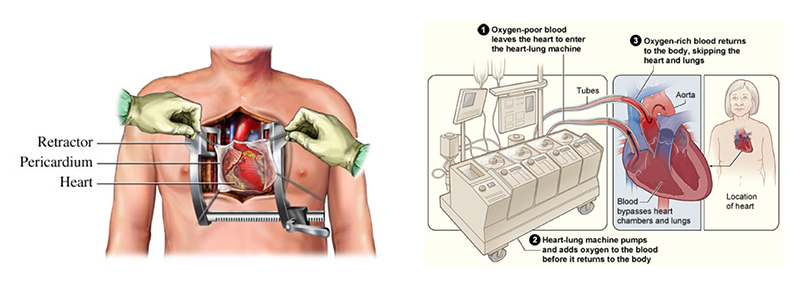
    This is a surgery where the surgeon must open the heart chambers to correct structural abnormalities. It mostly uses a heart-lung bypass machine to temporarily pump blood and exchange oxygen instead of the heart and lungs. This allows the surgeon to clearly see the internal structures during the open heart surgery. Examples include coronary artery bypass, heart valve replacement, and congenital heart defect repair for holes in the heart.

    Closed Heart Surgery

    This is a surgery that does not require opening the heart chambers or using a heart-lung bypass machine during the operation. It still requires an incision on the chest. It is often used for surgeries on blood vessels exiting the heart without operating directly inside the heart.

    Currently, many types of heart surgery have developed significantly. Sometimes, heart valve replacement and coronary artery bypass surgeries do not require a heart-lung bypass machine, resulting in less pain and smaller surgical wounds for the patient.

    Open heart surgery

    Indications for Heart Surgery

    Heart surgery is one of the treatment guidelines for certain heart and blood vessel abnormalities. The doctor will consider the appropriateness of the surgery based on the disease type, symptom severity, the patient’s physical condition, and suitable treatment guidelines for each individual, including:

    • Coronary Artery Bypass Grafting (CABG) for narrowed or blocked coronary arteries
    • Valve Repair or Replacement
    • Surgery for Congenital Heart Disease
    • Devices Implantation (Pacemakers)
    • Cardiac Transplantation

    Open Heart Surgery Procedure Steps

    The open heart surgery procedure takes place in an operating room by cardiothoracic surgeons, anesthesiologists, nurses, and related healthcare personnel to provide care according to clinical standards. The basic steps are as follows:

    • The patient receives anesthesia from an anesthesiologist to sleep and feel no pain throughout the surgery.
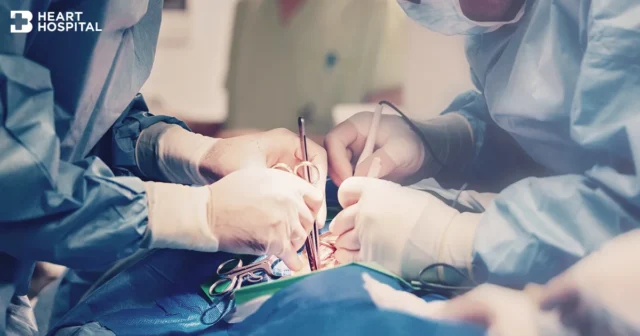
    • In a typical open heart surgery, the surgeon makes an incision in the middle of the chest, about 8 to 10 inches long, cutting through part or all of the breastbone to clearly access the heart.
    • If it is an open heart surgery procedure, the patient may be connected to a heart-lung bypass machine. This machine takes over the function of the heart and lungs, keeping the heart free of blood and allowing the heart to stop beating so the surgeon can work. Today, certain surgeries can be done without this machine, reducing related complications.
    • After the surgeon finishes the heart surgery, they will use wire to stitch the breastbone back together like before the surgery and stitch the skin layers back to their original state.

    Preparation Before Heart Surgery

    Preparing the body is a crucial part of reducing complication risks and helping the recovery proceed appropriately. Patients should follow these guidelines:

    • Inform the medical staff about any medications, especially blood thinners like antiplatelet and anticoagulant drugs, as well as over the counter medications, vitamins, and herbs.
    • Inform the doctor about medical history, such as having a cold within 2 weeks before the surgery.
    • Refrain from smoking for at least 6 weeks before surgery to reduce respiratory system risks.
    • The day before surgery, clean the surgical area with a specific antiseptic soap to help reduce the chance of infection.
    • Abstain from food and drinks after midnight before the surgery day, or at least 6 hours prior.

    Post-Operative Care and Open Heart Surgery Recovery

    After the surgery is complete, the patient enters the open heart surgery recovery phase and is monitored closely.

    • On the first night after surgery, the patient stays in the Cardiac Care Unit (CCU) or Intensive Care Unit (ICU) with vital sign monitors and 24-hour nursing care.
    • The patient will have 1 to 3 drainage tubes in the chest to drain residual blood and fluid around the heart and lungs, along with intravenous fluids and a urinary catheter to assess kidney function.
    • The surgical wound is cared for and cleaned by registered nurses. If the patient feels tightness or wound pain, the doctor will consider pain medication to relieve symptoms.
    • Once the condition is stable (about 1 to 3 days), the patient moves to a regular room for physical therapy, physical rehabilitation, and wound care for another 3 to 7 days, depending on individual recovery.

    Characteristics of Heart Surgery Wounds

    Wound characteristics vary depending on the disease, treatment guidelines, and techniques chosen by the doctor. They can be divided into 2 main types:

    1. Median Sternotomy

    This is the traditional incision used in many types of heart surgery, such as Coronary Artery Bypass Grafting (CABG), valve repair or replacement, and complex heart surgeries.

    • Location: In the middle of the breastbone, from below the neck notch down to just above the xiphoid process.
    • Size: Generally about 15 to 20 centimeters.
    • Characteristics: A vertical wound in the middle of the chest. The scar will gradually fade as it heals.

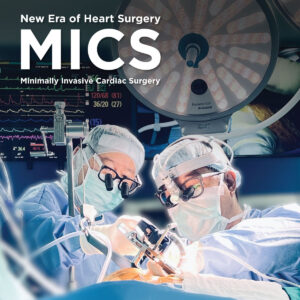
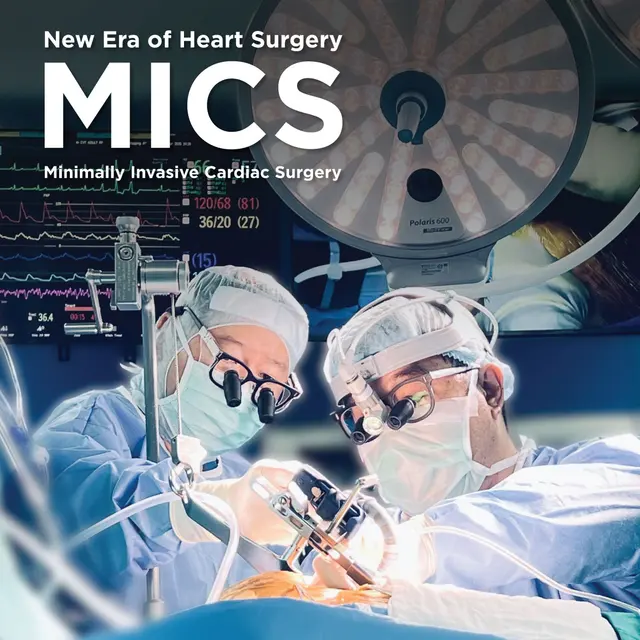
    2. Minimally Invasive Cardiac Surgery (MICS)

    This is a heart surgery performed through a small incision using specific tools, and in some cases, a camera is used to assist.

    • Location: Usually on the side of the chest under the right or left breast, depending on the surgery type.
    • Size: Generally about 4 to 10 centimeters.
    • Characteristics: Does not require splitting the breastbone, reducing trauma to the chest structure and potentially aiding a shorter open heart surgery recovery in suitable patients.

    Risks and Potential Complications After Heart Surgery

    When learning they need treatment, patients and relatives often worry about the risks. Today, heart surgery continuously develops in technology, surgical techniques, and patient care systems before, during, and after surgery. However, treatment outcomes and the overall open heart surgery success rate may vary for each patient depending on individual health factors.

    The doctor evaluates risks from various factors such as age, underlying diseases, the function of the heart and other vital organs, and the type and complexity of the surgery to plan appropriate treatment for each individual.

    Even though the surgery involves high clinical standards, some complications may occur, requiring close monitoring from doctors and nurses.

    • Chest pain and fever
    • Difficulty breathing
    • Blood loss
    • Chest wound infection (more common in patients with obesity or diabetes)
    • Heart failure
    • Irregular heartbeat
    • Lung inflammation or infection
    • Lung or kidney failure
    • Stroke
    • Cognitive Impairment
    • Blood clots
    • Risks associated with the heart-lung bypass machine

    These risks differ for each patient. Please consult a cardiothoracic surgeon for details regarding your specific case.

    Surgical Staff and Hybrid Operating Rooms at Bangkok Heart Hospital

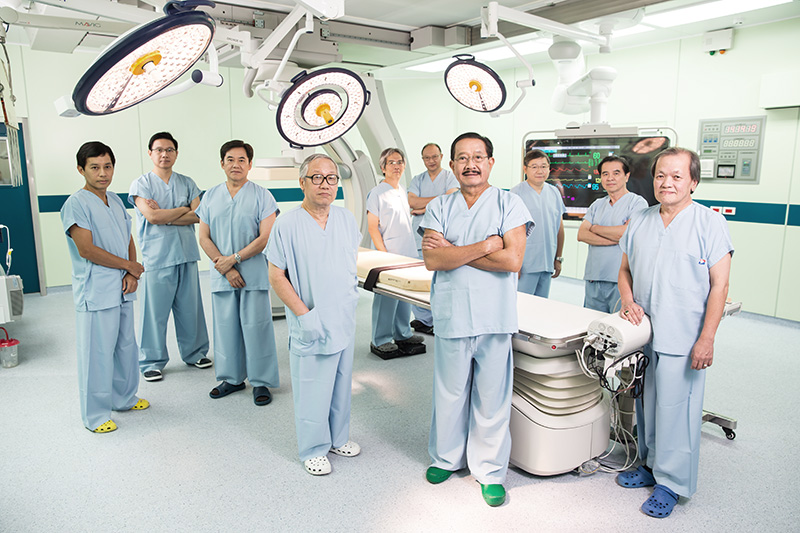
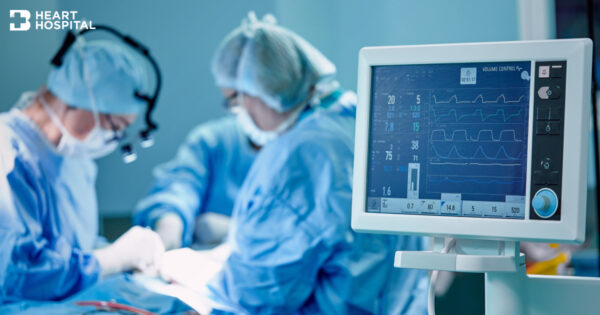
    Open heart surgery, Hybrid operation room

    Treating heart conditions surgically requires delicacy and specialized skills. Bangkok Heart Hospital is prepared to care for patients with various heart, vascular, and thoracic conditions. We have cardiothoracic surgeons, cardiologists, anesthesiologists, registered nurses, and related medical personnel to plan suitable treatments for each patient. Our Hybrid Operating Room combines surgical tools with current medical imaging systems to support complex open heart surgery and catheter-based procedures. We also have a Cardiac Care Unit (CCU/CICU) and post-operative care systems adhering to rigorous clinical standards.

    Summary

    Although open heart surgery is a major procedure that may cause anxiety for patients and relatives, receiving proper information, appropriate preparation, and care from medical professionals helps patients enter the treatment and rehabilitation process smoothly.

    Frequently Asked Questions 

    1. How long does the open heart surgery recovery take?

    Generally, recovery in the hospital for close observation takes about 5 to 7 days if there are no complications. However, the open heart surgery recovery period depends on the surgery type, techniques used, and the individual’s physical condition. For surgeries involving a separated breastbone, the bone takes about 6 to 8 weeks to heal before returning to normal activities or exertion as advised by the doctor.

    2. How many days until the surgical wound can get wet?

    Initially after surgery, the doctor will recommend wiping the body instead of taking a shower until the wound is completely dry and it is time for stitch removal, which usually takes about 1 to 2 weeks post-surgery. The timeframe depends on the wound type, closure method, and the doctor’s assessment. Patients should strictly follow the instructions of the medical staff to reduce infection risks and promote wound healing.

    3. Can elderly individuals or those with underlying diseases undergo heart surgery?

    Elderly individuals or those with certain underlying diseases may be able to undergo heart surgery. The doctor will thoroughly assess risks, health status, and the function of vital organs such as the heart, lungs, kidneys, and liver to formulate a treatment, anesthesia, and post-operative care plan tailored to each patient.

    For more information, please contact

    Cardiothoracic Surgery Center

    2nd Floor, Bangkok Heart Hospital.

    Service Hours: Monday-Sunday 07.00 a.m. – 04.00 p.m.

    (+66) 2310 3033

    (+66) 2755 1033

    1719 (local mobile calls only)

    [email protected]

    @hearthospital

    Save time finding a doctor

    Let AI check your symptoms and find a proper doctor for you

    AI Doctor Finder

    Consult a Specialist Doctor

    See all doctors

    Packages & Promotions

    Coronary artery angiography / percutaneous coronary intervention and Cardiovascular SurgeryCoronary artery angiography / percutaneous coronary intervention and Cardiovascular Surgery
    Coronary artery angiography / percutaneous coronary intervention and Cardiovascular Surgery

    62,100 - 1,610,500 Baht

    Detail
    More packages

    Medical Services

    More services

    Medical Services

    TAVI/TAVR Image
    TAVI/TAVR
    CABG-Coronary Artery Bypass Grafting Image
    CABG-Coronary Artery Bypass Grafting
    Atrial fibrillation at Bangkok Heart Hospital Image
    Atrial fibrillation at Bangkok Heart Hospital
    More services