
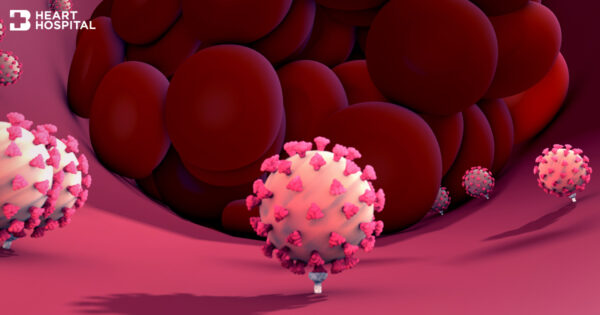
Amid global COVID-19 pandemic, Thailand has faced a recent outbreak, so called third wave attack with devastating impacts on people’s lives. As of April 2021, the number of infected cases and disease severity have continued to rise and become an unprecedented crisis for the country’s public health system. A number of medical studies have proven that patients who have certain underlying diseases are at greater risk of death if they are infected with COVID-19. One of the main reasons involves the significant damage of cardiac muscles caused by infection and body’s immune response. In severe cases, cardiac complications can be fatal, leading to heart attack. Considered a game changer, COVID-19 vaccines help to minimize the risk of infection while reducing disease severity and increasing survival rates. Vaccines have been claimed to be effective particularly in patients present with co-morbidities, despite the fact that some of them can cause rare side effect related to unusual blood clots.
COVID-19 Vaccines in Thailand
After Thai FDA approval, there will be several COVID-19 vaccines supplied by different manufacturers available in Thailand, including:
- Sinovac (inactivated vaccine): CoronaVac, also known as the Sinovac is an inactivated virus COVID-19 vaccine developed by the Chinese company Sinovac Biotech.
- Oxford-AstraZeneca (viral vector vaccine): The Oxford-AstraZeneca vaccine uses a adenoviral vector, a safe virus to deliver the gene that encodes the SARS-CoV-2 spike glycoprotein for stimulating the immune system to build up immunity against the disease.
- Sputnik V (viral vector vaccine): Sputnik V from Russia is another viral vector vaccine that works similar to AstraZeneca/Oxford vaccine by using safe viral vector to carry genetic material of the SARS-CoV-2 for immune system activation.
- Pfizer-BioNTech (mRNA vaccine): The Pfizer-BioNTech vaccine is made by using synthetic messenger RNA (mRNA) which is a new technique to trigger the immune system to produce protective antibodies without using actual bits of the virus.
- Moderna: Similar to Pfizer-BioNTech, Moderna is mRNA vaccine using new technique to produce immunity by the immune system—the body’s defense against infection through synthetic mRNA
- Chula Vac (mRNA vaccine): Chula Vac is COVID-19 vaccine produced in Thailand. It is an mRNA vaccine, similar to Pfizer-BioNTech and Moderna vaccines.
- Siam Bioscience (viral vector vaccine): Siam Bioscience vaccine produced in Thailand is a viral vector vaccine that works similar to Oxford-AstraZeneca vaccine.
COVID-19 vaccination and herd immunity
Herd immunity occurs when a large portion of a community (the herd) becomes immune to a disease, making the spread of disease from person to person unlikely. Herd immunity can be reached when at least 60-70% of the whole populations have been vaccinated and developed protective antibodies against COVID-19. Therefore, COVID-19 vaccination is highly recommended in all people who have no contraindication to the vaccines. More importantly, vaccination is crucial in patients who have preexisting conditions, including cardiovascular disease, diabetes, obesity, respiratory disease, chronic kidney disease, hypertension and cerebrovascular disease. Nevertheless, these conditions must be well-controlled without aggravating symptoms prior to vaccination.
Contraindications to COVID-19 vaccination
In accordance with recent restrictions, contraindications to COVID-19 vaccines include
- People who have received vaccines and present with severe allergic reactions or people who have had known allergy to any component of the vaccine.
- Patients who have acute conditions which are severe or uncontrollable.
- Patients who have preexisting conditions, e.g. heart disease and neurological disease which are aggravating or uncontrollable.
- People aged lower than 18.
- Pregnant women.
- Immunocompromised patients or HIV patients
Nevertheless, due to vaccine limitations, not all vaccines are applicable to everyone. In addition, vaccines also pose a wide variety of adverse reactions, ranging from mild to serious. Thus, special consideration and recommendation made by expert specialists are required before being vaccinated.
Side effects of COVID-19 vaccines
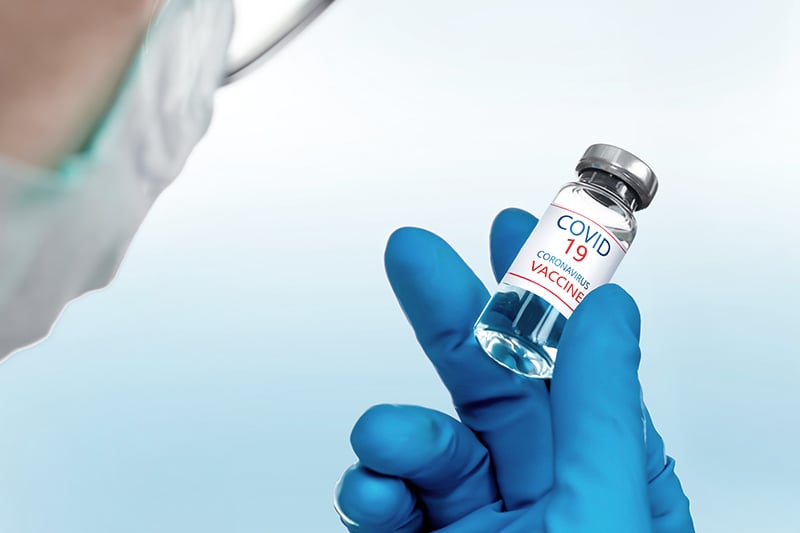
After COVID-19 vaccines have been administered to a large number of populations worldwide, an immense range of adverse reactions after vaccination has been interminably reported with different severity degrees and incidence rates among different countries. In fact, vaccines are designed to give a person immunity without the dangers of getting the disease. It is common to experience some mild-to-moderate side effects when receiving vaccinations since our immune system is instructing the body to react in certain ways. Most common side effects are only mild whereas serious side effects rarely develop. Vaccine benefits often outweigh their risks in most cases. The sooner the vaccine is administered, the quicker people can resume their previous lives and activities while safety precautions are still in place to prevent disease transmission.
Blood clots and COVID-19 vaccines
As reported globally and domestically, COVID-19 vaccines can produce serious side effects related to blood clots in the body which urges the temporary discontinuation of certain vaccines in some countries. Up to the present, blood clots in the veins associated with vaccines have been reported in different parts of the body, such as the brain, thigh and lower leg. In rare cases, blood clots can systemically travel to the vessel in the lung, causing blood clots in the lung (pulmonary embolism.) The cause of unusual blood clots or thrombosis chiefly involves the activation of immune system that acts against the platelets, resulting in low levels of platelets in the blood and leading to undesired blood clot formation in the body. This is, as already published on The New England Journal of Medicine, not a new adverse reaction caused by COVID-19 vaccines. (https://www.nejm.org/doi/full/10.1056/NEJMe2106315?query=TOC) In fact, it is also a possible complication during the treatment of cardiovascular diseases. Nevertheless, blood clots associated with COVDI-19 vaccines rarely happen, only 50-60 cases reported among 50-60 million administered doses. Clinical investigations and studies have been globally conducted in order to determine the definite explanation for the blood clotting effects reported among those taking certain types of COVID-19 vaccine. To ensure safety, some countries have temporarily stopped administering certain COVID-19 vaccines until firm evidences can be obtained.
Additionally, undesired stroke-like side effects have been currently reported in Thailand. However, symptoms usually appear to be temporary with mild-to-moderate severity and have less chance to cause long-term disability. Moreover, clinical studies are still further needed for monitoring long-term effectiveness and safety issues.
To stop the spread of COVID-19 pandemic, herd immunity is an ideal strategy. Nonetheless, herd immunity cannot be achieved if less than 70% of whole populations have not yet immunized. Vaccination does not only strive for halting disease transmission, but it can also help to mitigate disease severity. More importantly, COVID-19 vaccines are thought to be able to prevent the virus from mutations. SARS-CoV-2 can constantly change through mutations. Emerging variants derived from these mutations can become more contagious and uncontrollable, resulting in an increased transmissibility and disease severity. Furthermore, possible attribute of variants is a reduction in vaccine-induced protection from COVID-19. In order to confine the disease effectively, vaccine administration to the whole populations is urgently required while excluding people who are contraindicated to the vaccines. Once the majority of world populations is immune, restrictions can be eased and daily lives will eventually resume following standard safety precautions.