.jpeg)


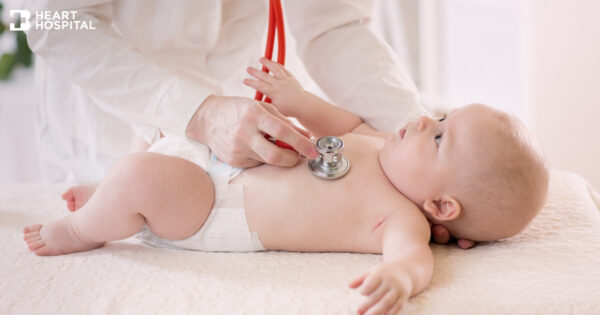
Heart disease does not only occur in adults and the elderly, newborn babies and kids can also develop cardiac disease. Some congenital heart defects in children are simple and treatments are not necessarily required. Other congenital heart defects in children seem to be more complex and may require several surgeries performed over a period of several years. Serious congenital heart defects are often diagnosed before or soon after the child is born. If any signs and symptoms are noticed, parents must seek immediate medical attention in order to get accurate and timely diagnosis, leading to effective treatment plans.
The causes of heart disease in children
The causes of pediatric heart disease can be divided into 2 main categories:
- Congenital heart defects in children
During the first six weeks of pregnancy, the heart of the fetus begins taking shape and starts beating. The major blood vessels that reach to and run from the heart also begin to develop during this critical time of the gestation. At this point, the heart defects may begin to develop. Contributing factors might include genetics, certain medical conditions, some medications and environmental factors such as smoking. The statistical data reveals that the average incidence rate of congenital heart defects reported in different studies is up to 8 per 1000 live births. Serious congenital heart defects are often diagnosed before or soon after the baby is born. In some cases, heart defects are discovered during adulthood such as abnormal blood vessels, septal defects defined as holes in the heart that form in the walls between heart chambers and other complex heart conditions. If heart defects are left untreated and found in adult patients when the diseases progress severely, surgical treatment might not be an option. Nonetheless, certain congenital heart diseases are non-serious conditions e.g. small holes of septal defect and mild heart valve stenosis which occurs when the heart’s valve narrows. In such non-serious conditions, medical treatments are not necessarily required. However, lifestyle modifications to prevent other complications are crucially recommended.
- The acquired heart diseases in children
Pediatric acquired heart disease develops after birth. The common acquired heart diseases in children include:- Rheumatic heart disease: Rheumatic heart disease is a condition in which the heart valves have been permanently damaged by rheumatic fever. The heart valve damage may start shortly after untreated or under-treated streptococcal infection. An immune response causes an inflammatory condition, resulting in continuous valve damages. Rheumatic fever most often affects children of school age. Although streptococcal infection is common, rheumatic fever seems to be rare due to the advancements of medicines, especially in developed countries.
- Kawasaki disease: Kawasaki disease is a leading cause of acquired heart disease in children. It causes inflammation in the walls of arteries throughout the body and the inflammation tends to damage the coronary arteries which supply blood to the heart muscle, causing coronary artery aneurysm.
- The inflammation of heart’s muscles, known as viral myocarditis caused by all forms of viral infection can potentially cause inflammation of heart’s muscles and disrupting of the electrical pathways that signal the heart to beat properly. As a result, it is one of major causes of sudden cardiac arrest.
- Heart rhythm problems. It refers to abnormal heart beats including heart beats too quickly, too slowly, or with an irregular pattern. The most common heart rhythm condition found in children is called tachycardia when heart beats too fast and it cannot fill with blood before it contracts. Related symptoms e.g. heart palpitations, rapid heartbeats, chest pain and dizziness might come and go randomly. However, it can lead to fatal conditions such as sudden cardiac death.

Warning signs and symptoms of heart disease in children
Not only impaired growth and child development process, heart disease can also potentially result in some life-threatening complications. If these five warning signs and symptoms present, parents must seek urgent medical attention in order to get accurate and timely diagnostic tests, leading to appropriate and effective treatment with the best possible outcomes. Five warning signs that might indicate heart disease include:
- Shortness of breath and feeling tired or weak easily.
- The presence of a grayish-blue or purple color of skin e.g. lips, mucous membranes and nails.
- Heart palpitations, rapid heartbeats, dizziness and frequent syncope that might be caused by heart rhythm problems.
- Other related symptoms e.g. chest pain. However, chest pain in pediatric patients is less likely to be diagnosed as heart defects, compared to adult patients with similar symptom.
- Irregular heart sounds discovered by cardiologists accompanied with or without abnormal symptoms.
Apart from these manifestations, children with heart defects, especially heart failure might present breathing troubles, poor feeding, limited growths e.g. height and body weight as well as impaired child developments, compared to normal children in similar age.
Congenital heart defects may have no long-term effects on child’s health. In some instances, such defects can safely go untreated. Only close monitoring is required. Some heart defects in children, however, are more serious and treatments are essentially needed soon after they are diagnosed. Annual health check-up is highly recommended. If abnormal signs or symptoms exhibit, immediate medical attention must be urgently provided by well-trained and highly experienced pediatric cardiologists in order to receive timely and effective treatments.