

Coronary artery stenosis is a disease that affects both mortality and quality of life. When inflammation of the blood vessel wall occurs, it is often followed by the accumulation of fat, cholesterol, fibrous tissue, or calcium on the vessel wall, forming plaque. This reduces the space within the vessel and causes insufficient blood flow to nourish the heart muscle.
Today, medicine has treatment methods that help widen narrowed coronary arteries without major surgery, namely coronary balloon angioplasty. This article will help you understand the treatment process, advantages, limitations, preparation, and various important points to ensure patients and families are well prepared with clear understanding.
What are coronary balloon angioplasty and stent placement?
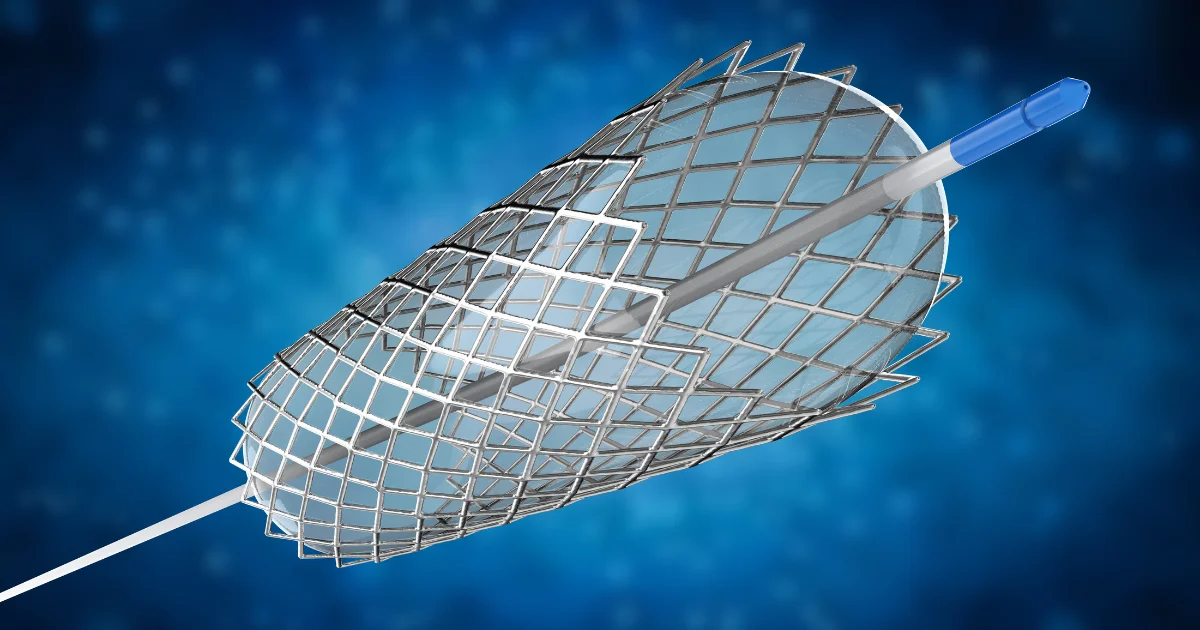
Coronary balloon angioplasty (Percutaneous Coronary Intervention or PCI) is a procedure to widen narrowed coronary arteries without open-chest surgery. Although many people commonly call it “balloon heart surgery,” in reality the doctor inserts a small cardiac catheter with a deflated balloon at its tip through a blood vessel at the wrist or groin.
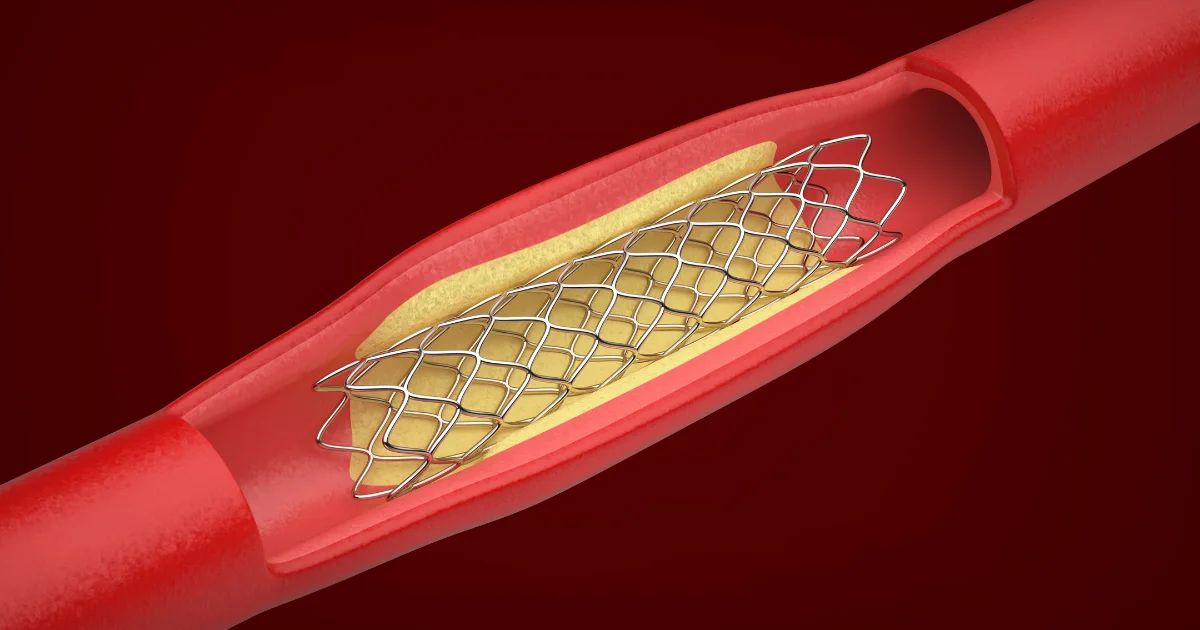
When the catheter reaches the narrowed or blocked area, the doctor inflates the balloon to compress the fatty plaque so it flattens and adheres to the vessel wall, reopening the pathway so blood can flow normally to nourish the heart muscle again. And to preventcollapse and blockage due to tearing of the blood vessel wall, doctors often place a stent, a tiny metal mesh, to attach to the vessel wall and act as a supporting framework. The balloon is then deflated and thecatheter is removed from the body, leaving the supporting stent permanently in place on the vessel wall.
Why is coronary balloon angioplasty necessary?
When the coronary arteries become narrowed, patients often experience chest tightness or pain, get tired easily, or havea risk ofacute myocardial ischemia. Coronary balloon angioplasty is therefore essential to save lives and relieve those symptoms, to prevent heart failure and help patients return to normal daily life.
Coronary artery calcification: an obstacle to vessel expansion
Plaque ina narrowed or blocked vessel is not caused by fat alone, butmay also include calcium as a component. This makesthe vessels stiff and difficult to expand. Many people therefore wonder: how iscoronary artery calcification treated?
In cases where the patient has alarge amount (Severe Calcified Lesion) of coronary artery calcification, a specialist may consider using a device to grind the calciuminto small particles (Rotational/orbital atherectomy) before balloon inflation and stent placement, toremove calcium from the vessel wall in the area where the stent will be placed. This helps make vessel opening and expansion more effective and also reduces the chance of re-narrowing within the stent.
Advantages of coronary artery expansion with balloon and stent
Coronary artery expansion with cardiac catheterization and balloon angioplasty (Percutaneous Coronary Intervention or PCI) is a highly popular treatment due to the following advantages:
- Lower risk of complications than bypass surgery because it does not require surgery or general anesthesia.
- Patients can leave the hospital sooner (1–2 days) and return to a good quality of life more quickly.
- It can be repeated multiple times if the arteries narrow again in the future.
Limitations of coronary artery expansion with balloon and stent
Although it has many advantages, coronary balloon angioplasty also has some limitations that patients should know, including:
- Some types of narrowing are not suitable for balloon angioplasty.
- There is a chance of re-narrowing at the same area due to the body’s natural wound-healing process.
Preparation before coronary balloon angioplasty
Before treatment, patients must strictly refrain from food and water as instructed by the doctor and inform the doctor of any drug allergies, especially to local anesthetics orcontrast media. Also provide a list of current medications, especially anticoagulants, so the doctor can adjust medications appropriately and safely.
How coronary balloon angioplasty is done and the steps of stent placement
For how to perform coronary balloon angioplasty, the doctor injects local anesthetic at the groin or wrist. A guiding catheter, a soft tube, is then inserted. When it reaches the narrowed area, the balloon catheter is connected to equipment outside the body to inflate the balloon, compressing theplaque to flatten it. After that, the balloon is deflated back to its original state and the catheter is withdrawn from the body.
Most patients remain conscious throughout catheter insertion and may feel mild pressure or tightness in the chest while the balloon is inflated. This is normal and occurs because blood flow to the heart temporarily decreases. The tightness will subside once the doctorremoves the balloon.
In addition, if the doctor determines that the narrowed area still cannot be widened enough, balloon angioplasty with stent placement will be performed by placing a small stent to attach to the vessel wall. Currently, drug-eluting stents (Drug Eluting Stent/DES) are used instead of bare-metal stents, whichhelp reducethe problem of re-narrowing. However, the type, size, and number of stents used depend on the physician’s discretion.
After coronary balloon angioplasty: what side effects and risks may occur?
The doctor will thoroughly assess the patient’s readiness, but some side effects may still occur after coronary balloon angioplasty, such as bruising or tightness around the wrist or groin where the catheter was inserted, allergic reactions to contrast media, or temporary arrhythmias. The medical team will provide close care and monitoring.
Symptoms after coronary stent placement and recovery time
Common symptoms after coronary stent placement include soreness or tightness at the catheter insertion wound or mild chest discomfort, which typically resolves on its own. After coronary stent placement, the patient will be cared for in the Coronary Care Unit (CCU) for close observation for about 1–2 days. If nocomplications are found, the patient can go home and continue recovering at home for a period before returning to normal daily activities.
Caring for patients after coronary balloon angioplasty for long-term heart health

Post–balloon angioplasty care is very important for long-term treatment outcomes. The supporting stent can remain with us for life, but if patients do not change their behaviors or do not take antiplatelet medications as prescribed, there is a risk of blood clots orthe vessels becoming narrowed again, either at the site that was already expanded with the balloon or by developing new narrowing points. Therefore, taking medication strictly as prescribed, quitting smoking, controlling diet, and exercising are indispensable.
Heart Center, Bangkok Hospital, ready to care for every heart health problem
Heart disease requires precise and timely care. The Heart Center, Bangkok Hospital is fully equipped to provide diagnostic and treatment services for coronary artery stenosis and occlusion, cared for by experienced cardiologists and cardiac surgeons working together with a multidisciplinary team, along with a fully equipped cardiac catheterization laboratory (Cath Lab) to evaluate and plan appropriate treatment for each individual patient—helping the heart become strong again and ready for life once more.
Article summary
Coronary balloon angioplasty is a treatment option that effectively widens blood vessels with minimal trauma. However, this treatment does not address every root cause. Lifestyle modification and ongoing health care following the doctor’s recommendations are therefore key to helping patients maintain a strong, healthy heart and a good quality of life.
Frequently asked questions (FAQ) about coronary balloon angioplasty
1. How many years does coronary balloon angioplasty last?
The stent becomes embedded as part of the vessel wall and can remain with us for life. However, whether the vessel will narrow again depends on behavior changes, diet control, and strictly taking antiplatelet medication.
2. How many days is the recovery after coronary balloon angioplasty?
In most cases, the doctor will have the patient stay for observation in the hospital for only 1–2 days. If nocomplications are found, the patient can go home and continue recovering at home for about 1 week, after which light activities can usually be resumed as normal.
3. Does coronary balloon angioplasty require general anesthesia?
In general, patients do not need general anesthesia. The doctor uses local anesthetic injection at the wrist or groin. The patient remains conscious and can communicate with the doctor or nurse throughout the treatment.
4. If there is coronary artery calcification, can balloon angioplasty be done?
Yes. A specialist may consider using a calcium grinding device (Rotational/orbital atherectomy) as well, to prepare the blood vessel and remove hardened calcium before balloon inflation and supportive stent placement.