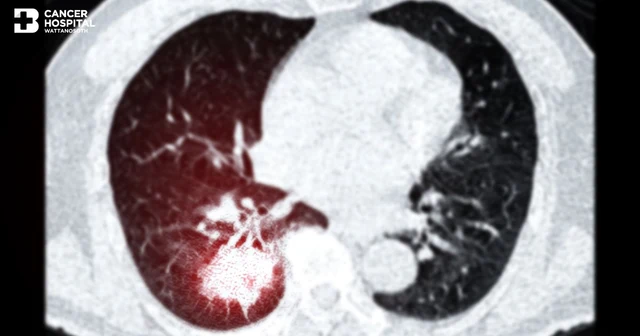



Oral cancer is commonly found in older adults. If the tumor is large, it may spread to nearby organs. Therefore, surgery is the main method for treating oral cancer to remove the cancerous mass from the body before it becomes severe. This depends on the location, size, and stage of the cancer. Jawbone reconstruction using the fibula (Fibula) with the 3D Printing Technique is a treatment option for oral cancer in cases where the jaw must be replaced after being lost due to cancer.
What are the causes that require jawbone surgery?
Abnormalities of the jawbone that require surgical treatment include:
- Oral cancer (Cancer of Oral Cavity)
- Accidents, jawbone fractures, deformity (Facial Trauma)
- Severe bone infection (Osteomyelitis)
- Bone death after radiation therapy (Osteoradionecrosis)
- Congenital craniofacial abnormalities (Congenital Defect)
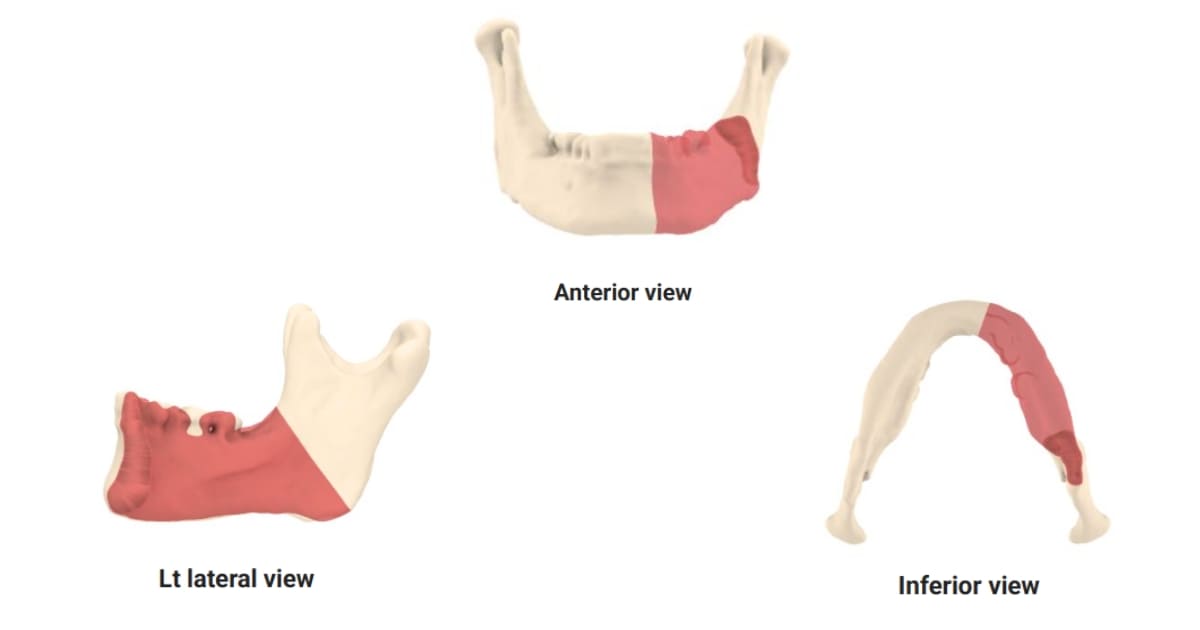
Why is jawbone reconstruction surgery necessary?
When a patient needs part of the jaw removed, they often lose the ability to chew and achieve proper occlusion, and facial deformity may occur; therefore, jawbone reconstruction surgery is required. Bone from another part of the body is used as a replacement, such as the fibula bone (Fibula Bone), scapular bone (Scapular Bone), or iliac bone (Iliac Bone). The most commonly used is the fibula bone (Fibula Bone) because it is easy to shape to match facial contours, can be used in a long segment to replace one entire side of the jaw, is strong and can support chewing forces well, also supports future dental implants, and has relatively low side effects at the leg (Donor Site). Patients can still walk because the primary weight-bearing bone is the tibia (Tibial Bone).
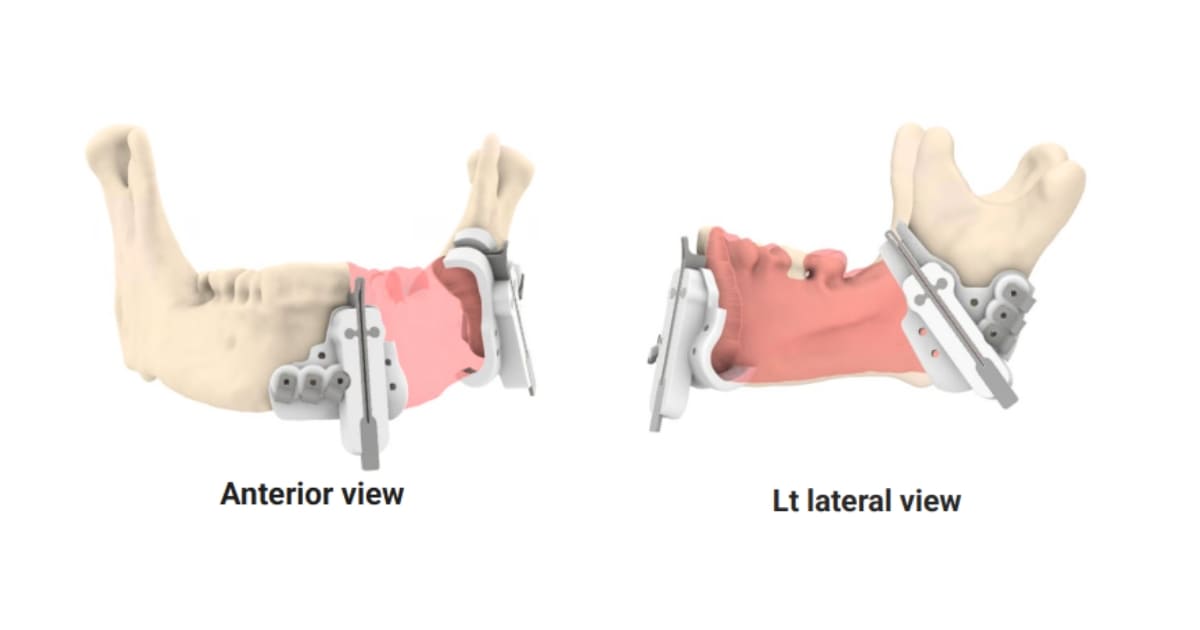
What is traditional fibula jawbone reconstruction surgery?
Traditional fibula jawbone reconstruction surgery (Traditional Technique) is the removal of the problematic portion of the jawbone and then manually shaping the fibula bone (Fibula) into segments to match the original facial framework as closely as possible, and bending a titanium plate (Titanium Plate) in the operating room to secure and contour the bone.
What are the limitations of traditional fibula jawbone reconstruction surgery?
- Long operative time
- Requires highly experienced surgeons
- Facial curvature may not be identical to the original 100%
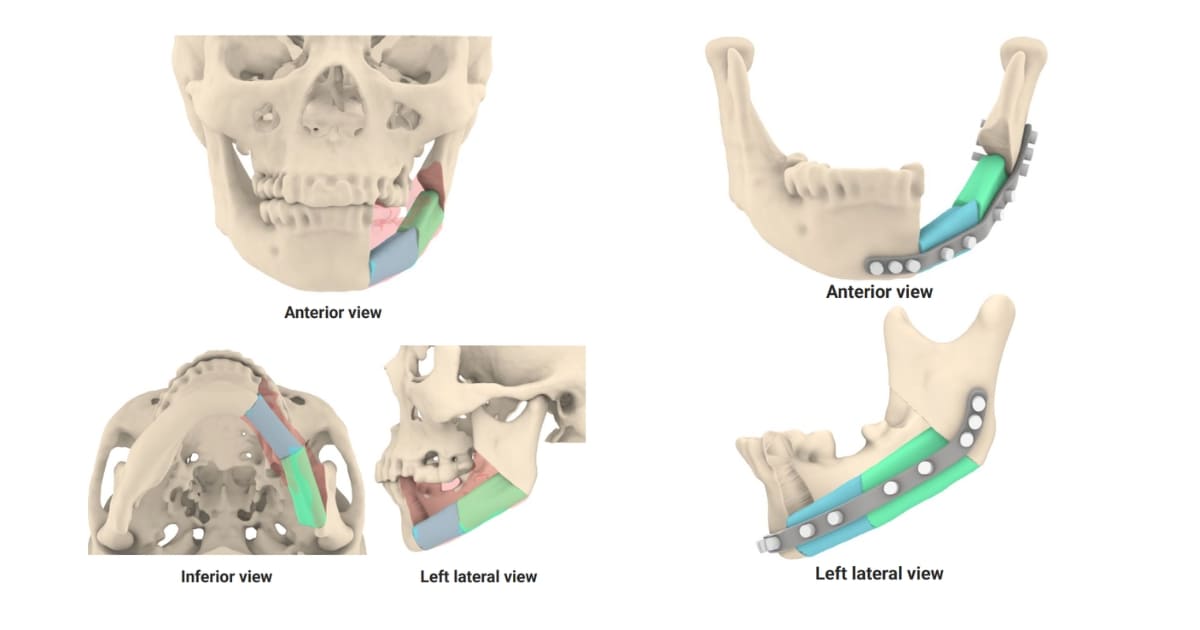
What is fibula jawbone reconstruction surgeryusing 3D Printing Technique ?
Fibula jawbone reconstruction surgery using the 3D Printing Technique is surgery on the problematic part of the jawbone using 3D Printing technology, which uses the patient’s CT Scan images to create a realistic three-dimensional jawbone model for planning and preparing the new jawbone reconstruction before the actual operation. This method addresses the limitations of traditional jaw reconstruction by allowing surgeons to see the patient’s true 3 dimensional anatomy before surgery, plan the operation at the correct positions, and prepare surgical equipment in advance very effectively.
What is the design process for the 3D Printing Technique ?
- Perform CT Scan of both the jaw and the area where the fibula bone will be harvested (Fibula)
- Create a 3D computer model in which biomedical engineers use design software to simulate where to cut the bone, how long, and how to realign the bone for reconstruction.
- Print a life-size 3D model of the actual bone
- Cutting Guide (a guide indicating the cutting line) for both the jawbone and the leg bone
- Bend and customize the titanium plate to match the original jawbone, to fixate between the remaining jawbone and the leg bone used for reconstruction
Once the 3D Printing Model is obtained, on the day of surgery the Cutting Guide is used to determine the cutting positions of the jawbone and leg bone for greater precision. Then the leg bone (Fibula Free Flap) is arranged according to the pre-planned design, secured with the pre-bent Titanium Plate , and blood vessels between the leg bone and the neck vessels are connected using a microsurgical microscope to provide blood supply to the newly reconstructed bone.
Advantages of fibula jawbone reconstruction surgery using the 3D Printing Technique
- More precise surgical positioning
- Reduced operative time with preoperative planning; faster bone cutting and alignment
- Postoperative facial contour closer to natural appearance
- Easier future dental implant placement
Comparison table: traditional fibula jawbone reconstruction vs 3D Printing Technique
|
Topic |
Traditional (Traditional Technique) |
3D Printing Technique |
|
Planning |
Assessed from CT SCAN and in the operating room |
Preoperative 3D planning on a computer |
|
Titanium plate bending |
Hand-bent in the operating room |
Pre-bent according to the model |
|
Clarity and accuracy |
Depends on the surgeon’s experience |
Accurate according to the Cutting Guide |
|
Operative time |
Longer than the 3D Printing Technique |
Shorter than the traditional technique |
|
Postoperative shape |
May be slightly asymmetrical |
Symmetrical and close to natural |
|
Dental implant placement |
Requires later adjustment |
Can be incorporated into the plan immediately |
Fibula jawbone reconstruction surgery using the 3D Printing Technique is a procedure to reconstruct a new jaw by creating an accurate, individualized model so that patients receive the best possible treatment outcomes.
Which hospital specializes intreating oral cancer?
Specialty Cancer Center, Bangkok Hospital Cancer Hospital Wattanosoth, with specialized cancer physicians who are highly skilled and experienced, modern tools and technology, as well as a multidisciplinary team providing close care, offers oral cancer treatment with fibula jawbone reconstruction using the 3D Printing Technique so that patients can regain a good quality of life again.
Physician specializing in the treatment of oral cancer
Dr.Chanat Kanchit Head and neck surgeon, Bangkok Hospital Cancer Hospital Wattanosoth
You can click here to make an appointment yourself.