Bangkok Hospital
Caret Right
Search
CTA Curve
Find doctors icon
Find doctors
Appointments icon
Appointments
Contact icon
Contact
Call undefined
Menu
  • Select Hospital

  • Language

Doctor not found
Doctor not found
Doctor not found
Doctor not found
Bangkok Hospital
Stay Connected
View on Google Maps
    Privacy Policy

    |

    Cookie Policy

    Copyright © 2026 Bangkok Hospital. All right reserved


    Network Hospitals Directory
    MEMBER OFBDMS logo

    Prostate Cancer

    3 minute(s) read
    Information by
    Bangkok Cancer Hospital
    Updated on: 26 Jan 2026
    Recommended Packages
    Package Image
    Cancer Screening Packages
    Prostate Cancer
    Bangkok Cancer Hospital
    Updated on: 26 Jan 2026
    Table of contents
    • Overview
    • Diagnosis
    • Treatment
    • Author

    Overview

    General Information about Prostrate Cancer

    The prostate gland is an important organ in the reproductive and urinary system in men. It is responsible for the production of seminal fluid in semen. The gland is located at the base of the bladder; it is divided into two lobes with the urethra at the center, as seen below.

    Figure 1 Anatomy of prostate gland

    Prostate cancer is the most common cancer in men. Statistics from the United States indicate that in 2014 there will be as many 233,000 new cases of prostate cancer. That will account for 24% of all cancer. It is also a major cause of death second only to lung cancer. The latest figures show that in 2014 there were 29,480 deaths as a result of prostate cancer. Prostate cancer is a slow spreading cancer, as such, early detection will aid greatly in making treatment a success.

    Diagnosis

    Prostate cancer is most commonly found in men at the average age of 70. Patients will visit the doctor with symptoms such as difficulty passing urine, including straining to pass, inability to urinate, and blood in the urine or semen. Presently an effective method of diagnosis is the digital rectal exam (DRE), during which a gloved, lubricated finger is inserted into the rectum to feel for any bumps or hard areas on the prostate that might be cancer. Another effective method is the prostate-specific antigen (PSA) blood test which is used mainly to try to find prostate cancer early in men without symptoms. But it is also one of the first tests done in men who have symptoms that might be caused by prostate cancer. This is recommended for males aged 45-50 years and who have a family history of prostate cancer.

    Image 2 Digital rectal examination

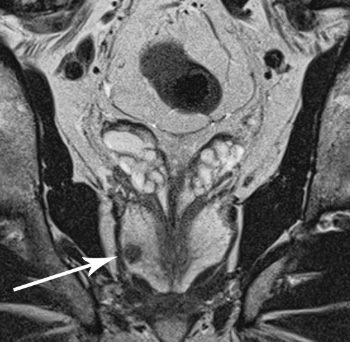
    Performing a biopsy on the prostate can also be an effective pathological diagnosis and treatment method. It has been found that 95% of cancer cells in the prostate are Adenocarcinoma. Following diagnosis, analysis of family history, and health check-up, it is also important to perform other tests to determine whether the cancer has spread. This can be done via an MRI, bone scan, X-ray, or PSA according to the symptoms displayed by the patient.

    Image 3 MRI of Prostate cancer

    Treatment

    Treatment for prostate cancer includes surgery, radiotherapy, hormonal therapy, and chemotherapy. The choice of treatment will be dependent on stage of cancers and other risk factors. Patients in the low-risk group will require local treatment such as radical prostatectomy which may include external beam irradiation or brachytherapy. Patients who have higher risk factors are in the moderate risk group or high risk group; these may require what is referred to as regional treatment, or systemic treatment. Treatment will include the surrounding areas for example pelvic lymph node dissection or pelvic lymph node irradiation. Systemic treatment also includes androgen deprivation therapy and chemotherapy.
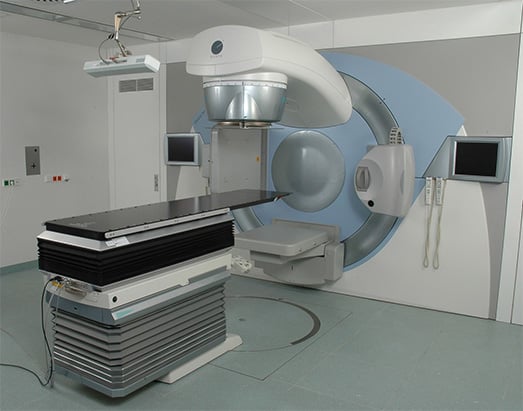
    Image 4 Linear accelerator for VMAT and IMRT


    Image 5 VMAT in Prostate cancer

    In cases where the cancer has grown and/or has spread to other organs and the patient is in a poor physical condition, there are higher risks that treatment will cause unwanted side effects. The treatment we offer will focus on providing a good quality of life for the patient, treatment decision will be based on the stage of cancer, symptoms, and needs of the patient and his/her relatives (palliative care).

    Services in prostate cancer treatment will be provided by a team of oncologists, nurses, and other multidisciplinary medical personnel. We offer multi-dimensional care that takes into consideration physical, emotional, and social needs of the patient and his/her relatives.

    Wattanosoth Hospital is designed to offer comprehensive care for cancer patients, from the screening and early detection program, treatment with hi-end technology, a multidisciplinary medical team, and a palliative care team.

    Author

    Dr. Chanawat Tesavibul
    Radiation Oncologist

    Related Doctors

    See all doctors

    Packages & Promotions

    Cancer Screening PackagesCancer Screening Packages
    Cancer Screening Packages

    6,500 - 82,800 Baht

    Detail
    More packages

    Cancer Type

    See All

    Cancer Type

    Ovarian Cancer Image
    Ovarian Cancer
    Nasopharyngeal Carcinoma Image
    Nasopharyngeal Carcinoma
    Head & Neck Cancer Image
    Head & Neck Cancer
    See All