Bangkok Hospital
Caret Right
Search
CTA Curve
Arzt suchen icon
Arzt suchen
Terminvereinbarung icon
Terminvereinbarung
Kontakt icon
Kontakt
Telefon undefined
Menu
  • Wählen Sie ein Krankenhaus

  • Language

Doctor not found
Doctor not found
Doctor not found
Doctor not found
Bangkok Hospital
bleiben Sie in Kontakt
Google Maps anzeigen
    Datenschutzrichtlinie

    |

    Cookie-Richtlinie

    Copyright © 2026 Bangkok Hospital. All right reserved


    Bangkok Krankenhausnetzwerk
    MEMBER OFBDMS logo

    Skin Cancer

    2 Minuten zum Lesen
    Informationen von
    Bangkok Cancer Hospital
    Aktualisiert am: 26 Jan. 2026
    Skin Cancer
    Bangkok Cancer Hospital
    Aktualisiert am: 26 Jan. 2026
    Inhaltsverzeichnis
    • Facts
    • Risk Factors
    • Symptoms
    • Diagnosis
    • Prevention
    • Treatment
    • Author

    Facts

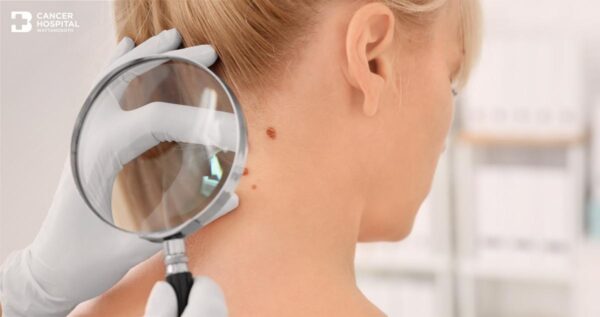
    Skin cancer is cancer that develops on the skin due to abnormal growth of skin cells. There are several types of skin cancer which may include:

    • Basal cell carcinoma Less severe skin cancer, occurs near the surface
    • Squamous cell carcinoma Contains traits similar to basal cell carcinoma, however it grows and spreads faster. Usually the cancer will spread into deeper layers of the skin, often causing lumps to form.
    • Malignant MelanomaThis cancer is a neoplasm of melanocytes or a neoplasm of the cells that develop from melanocytes. It is uncommon, but can be severe as it has high risk of spreading into the blood stream.

    Skin cancer may continue to grow in size and spread to other vital organs such as the lymphatic glands. It is common found in individuals aged over 40 and is more common in men than women.

    Risk Factors

    1. Exposure to ultraviolet light (UVA, UVB). As such people, who work under the sun, engage in outdoor sports activities, like to sunbathe, are at higher risk of skin cancer.
    2. Ethnicity/Nationality- It has been found that blonde Caucasians are at higher risk (due to less skin pigmentation) of developing skin cancer than darker skinned individuals.
    3. A family history of skin cancer
    4. Immune deficiencies such as HIV or intake of immune suppressants
    5. The skin area has received radiotherapy in the past

    Symptoms

    1. Notice if a mole has a rash or lumps that grow faster than normal. Also pay attention to color changes, uneven edges, and any bleeding
    2. A chronic wound that does not heal
    3. Chronic rash

    Diagnosis

    Early detection is the best way to treat skin cancer. This includes self-check, using a mirror and your hands to look for lumps when there is reason to be suspicious. Consultation with a skin cancer specialist for diagnosis (pathology/biopsy) and timely treatment are also important.

    Prevention

    1. Avoid sunlight, use sunscreen that SPF > 15
    2. Avoid skin irritants

    Treatment

    Surgical treatment is effective in treatment of skin cancer, however in cases where the cancer has spread or is Malignant Melanoma then ablation and chemotherapy will be required after surgery.

    Author

    Dr. POTJANA JITAWATANARAT
    Medical Oncology

    Termin

    Alle Ärzte anzeigen

    diverse Krebsarten

    Alle ansehen

    diverse Krebsarten

    Leukemia Image
    Leukemia
    Breast Cancer Image
    Breast Cancer
    Head & Neck Cancer Image
    Head & Neck Cancer
    Alle ansehen